

















How to clean concrete floors depends on the finish and the dirt. Sweep the grit off first. Wash with a matching cleaner, rinse the soap away, and let the slab dry before traffic or paint. A sealed floor usually wants nothing harsher than a mild wash. Bare concrete can take a stronger degreaser, and only a floor that will be coated needs an etch.
Rust-Oleum EpoxyShield concrete etch is the masonry prep product to review when a bare floor will be coated after the wash. Follow the label. It is not a daily cleaner.
Integrity Supply has sold painting, safety, and construction supplies from Cleveland, Ohio since 2000. Most of those buyers are professional paint contractors working a full schedule, and maintenance crews plus DIY customers shop that same nationwide catalog. Cleaning is the step that decides whether a later coat will actually stay stuck. And this guide stays on the wash instead of picking a coating, a resurfacer, or a grinder.
If you only need the short version, follow the sequence below and then read the section that matches the stain in front of you.
- Move vehicles, mats, and stored material so the whole slab is open to work.
- Sweep or vacuum the grit so it does not scratch the finish while you mop.
- Drop a little water on the floor. If the water beads, the floor is sealed. If the water darkens the concrete, the floor is bare.
- Treat oil, paint specks, or other spots before you wash the whole area.
- Mop or scrub with the cleaner that fits the finish, then rinse the floor with clean water.
- Let the floor dry fully before you return it to traffic, and longer still before any coating.
How to clean concrete floors starts with the finish
Run this simple water test on the slab before you spend money on a jug of cleaner. Put a few drops on a spot that sits out of the main walkway. Give the water about a minute before you judge it. Standing beads mean a sealer, polish, paint, or epoxy film is still protecting the concrete. A dark wet spot means the concrete is still open and will soak up whatever liquid you put on it.
That single difference should change which cleaner you buy. Sealed and painted floors do best with a little mild detergent, or with a cleaner made for finished floors. Bare garage slabs, open shop floors, and exterior concrete can handle a concrete cleaner or a real degreaser. The soil on those floors is usually oil and tire residue, not ordinary household dust.
Acid and etch products are not a substitute for everyday soap, because they open the surface so a later coating has something to grab. Use an etch only when the next step is a coating, and only after the floor is already free of oil film.
Sherwin-Williams describes the same split in its indoor concrete floor guide. Sealed floors tolerate a wider set of cleaners. Unsealed floors should stay with non-acidic products so you do not etch a floor you meant to keep. The water test is the field check that settles the question. Do not trust a glossy look by itself, because a worn sealer can shine in one bay and be open in the next.
Sweep, then treat the spots
Loose grit left on the slab is exactly what puts swirl marks into a sealed floor. Sweep, dust mop, or vacuum the whole slab before any wash water hits it. On a busy jobsite, sweep only after the last cut or grind of the day, or you will wash that same dust twice.
Deal with the spots first, because a full-floor mop will not lift a dried oil drip or a paint speck. Work the spots in a small test area, and try the product where a mark will not show.
Oil and grease
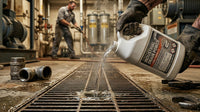
Fresh oil lifts far more easily than oil that has sat for weeks, so blot up whatever is still liquid. Do not smear that oil across a wider area with a dry rag. On bare concrete, a degreaser labeled for grease, oil, and shop grime is the right next step. Integrity Supply stocks several degreasers for that job.
- Super Clean cleaner and degreaser, 32 oz is a concentrated citrus formula listed for grease.
- Zep Fast 505 degreaser is a concentrated lemon formula sold by the 128 oz jug in a four-pack, listed for all-purpose cleaning.
- Krud Kutter professional cleaner and degreaser comes in a 32 oz spray bottle, concentrated, in a six-pack.
Follow the printed label when you decide how far to dilute it. Scrub with a nylon brush rather than a wire brush, so you do not cut the concrete or scratch a sealer. Wipe up or rinse that spot before you wash the rest of the floor. Old, deep oil may lighten in color and still show through. A good cleaning removes the oily film that would block a coating, but it may not erase a stain soaked deep into the slab. If a dark spot still feels oily after a second wash, treat it again before any etch or paint.
Paint specks and overspray
Cured paint will not dissolve in a wash. Scrape flakes flat, then wash the dust away. A full stripper job, or any decision about which remover to buy, belongs in a different task. If an old coating covers the floor, you are past a wash and into repair or removal.
Pick a cleaner for the whole floor
Once the spots are treated, wash the open area with a product matched to the floor, not to the strongest jug. These are live Integrity Supply items at the time of writing, and the use is named on each product page.
| Floor and soil. | What to use. | Catalog example. | Why it fits. |
|---|---|---|---|
| Sealed, painted, or everyday indoor dust. | Mild floor cleaner. | Trewax neutral floor cleaner, 32 oz. Listed for vinyl, rubber, tile, and concrete floors. | Maintains a finish without an acid bite. |
| Bare indoor concrete with light soil. | Concrete cleaner. | Quikrete concrete cleaner, 1 qt. Concentrated. Indoor or outdoor. | Made for concrete rather than for wood or stone. |
| Exterior drives, walks, and open slabs. | Concrete or driveway cleaner. | Mold Armor concrete cleaner, 1 gal, four-pack. Listed for concrete, driveways, brick, and sidewalks. | Sized for outdoor flatwork. |
| Oil, tire marks, and shop grease. | Degreaser. | Zep Fast 505 or Krud Kutter professional degreaser. | Labeled for grease and grime, not for daily dust. |
| Bare concrete that will be coated. | Etch, after the oil is gone. | Rust-Oleum EpoxyShield concrete etch, or DRYLOK etch cleaner, 12 oz. Brush applied. | Profiles the surface for a later coating. Not a soap. |
Read the whole container label before you mix the first bucket of wash water. The Quikrete quart and the Mold Armor gallon are both marked concentrated, so a full-strength pour wastes product and leaves a film. Zep also sells a driveway and concrete cleaner labeled as a pressure washer cleaner for walkways, patios, driveways, and parking lots. Use that cleaner only with a washer, and only on exterior concrete that can take the water volume. When you need to choose the surface-cleaner attachment itself, see the separate guide on pressure washer surface cleaners.
Leave muriatic acid on the shelf for a routine wash. Integrity Supply sells it for pools and outdoor work, and the label controls dilution and use. That acid is the wrong bottle for a sealed shop floor or for a quick mop.
Wash, rinse, and dry without leaving a film
Mix the cleaner in a clean bucket, and on a sealed floor a microfiber mop is usually the only tool you need. On bare concrete, use a stiff nylon deck brush to move oil out of the surface texture. Work in sections you can rinse before the soap dries, because dried cleaner becomes a new stain the next time the floor gets wet.
Rinse with clean water until the runoff looks clear and the concrete no longer feels slick. A wet vacuum helps indoors, where a hose would flood the room, and outdoors you should push rinse water off the slab before it dries. Change the rinse water as soon as it turns gray, or that dirty water puts the soil right back down.
Drying the slab matters as much as the wash, because a floor can look dry and still hold water in the pores. Before you reopen the floor to foot traffic, wait until the color looks even and no damp patches remain. For paint, primer, a resurfacer, or an epoxy kit, follow that product's own dry-time and moisture rules. Do not guess from a quick hand test if the coating label calls for a longer wait. New coatings fail more often from moisture trapped in the slab than from one missed spot of dust.
Keep the work room ventilated while cleaners are down, especially with a degreaser or an etch product. Wear gloves and eye protection from the safety collection when the product label calls for them. Never mix two products in one bucket, and never combine acid with a bleach cleaner.
What not to use on concrete floors
A stronger chemical is not the same thing as a cleaner floor. These are the mistakes that show up a day after the floor looked perfectly fine.
- Do not put acid, an etch, or a long vinegar soak on sealed, painted, or polished concrete. Acid dulls the finish and can open a floor you were only trying to wash. Save the etch for bare concrete that is about to be coated.
- Do not pick up a wire brush or a grinding cup and treat it like a cleaning tool. That kind of work is surface removal, not ordinary washing. If the floor actually needs removal, use the prep-tool guide linked below rather than going back to the mop bucket.
- Do not walk away and leave soapy water sitting on the floor. Leftover residue grabs the next round of dirt and can also block a coating.
- Do not pressure wash an interior sealed floor just because the garage floor looks dirty. Pressurized water drives under wall plates and down into open cracks. A flat mop and a wet vacuum are the right tools for indoor work.
- Do not roll or spray a coating over oil you can still see. If the rinse water still beads on a dark spot, that spot is still contaminated with oil. Wash that spot a second time before you move on to the rest of the floor.
A little dish soap in warm water is a fair wash for many sealed floors, which is why maker guides mention it. Dish soap becomes a weak choice once garage oil has packed down into the surface. Move up to a degreaser when the wash water stays milky and the spot still feels tacky.
How often to clean, and when washing is not enough
Dust mop a sealed indoor concrete floor as often as the daily traffic demands. A drywall shop needs a daily sweep plus a damp mop on a set day, not only when the floor looks gray. Wipe fresh spills on the same day they happen. Both oil and paint become much harder to lift after they cure. Floor mats at each door cut down the grit that slowly scratches a sealer.
Exterior slabs and driveways need a wash when dirt, a mildew shadow, or winter film makes them slick or uneven in color. A driveway cleaner or a pressure-washer detergent is meant for that exterior flatwork. That outdoor mix is not a stand-in for the weekly indoor mop.
Stop and change the plan when another pass with cleaner cannot fix the floor.
- Stop if the surface is crumbling, badly spalled, or full of open holes. That damage is a repair problem, covered in the concrete surface repair guide, Soap will not solve it.
- You may need a new wear layer when the top paste of the slab is gone. Read how to resurface concrete before you buy bags of resurfacer. In that situation, cleaning is only the first prep step in a larger job.
- You are choosing a garage coating or an epoxy kit. Those guides cover product choice and coverage. This page only gets the slab clean enough for you to start that later work.
- You are about to paint and you need the scrape, profile, and prime sequence. Use how to prepare a surface for painting but only once this wash is completely finished.
A painting-day clean versus a maintenance clean
Contractors clean a concrete floor for two different reasons, and the supplies are not the same.
A maintenance clean is what keeps a floor in safe daily service. Sweep the dust off, give it a mild wash, rinse it clear, and let it dry. On a sealed bay, Trewax neutral floor cleaner matches that maintenance job because the product page lists concrete among the floors it maintains. You should not etch a finished floor that you plan to keep in service. An etch product is not a way to add shine.
A painting-day clean has to be stricter than a weekly mop. The coating has to stick, so the floor has to be bare, sound, and fully free of oil. Degrease the slab before you think about etch. Keep rinsing until the water sheets across the floor instead of beading up on oily spots.
Then, if the coating maker calls for a profile and the concrete is still smooth and tight, use an etch. The Rust-Oleum EpoxyShield concrete etch on our site is a clear masonry prep product. It is brush applied, listed for indoor and outdoor use, with a coverage area of 250. The DRYLOK etch cleaner is a 12 oz concrete cleaner in the same masonry prep family. It is also brush applied, with a listed coverage area of 300.
Neither of those product pages is a license to skip the printed label. Rinse the etch the way the can says, and let the floor dry before any coating from the painting collection.
Use the etch only on the specific area you actually plan to coat. There is no benefit at all in etching a sealed hallway you only wanted to mop. And do not etch a floor that still has sealer or paint on it. An etch cannot profile a surface that it cannot actually reach. Remove that old film first, or pick a coating system whose label says it can go over the film.
Jobsite habits that keep the wash from going wrong
A few ordinary field habits matter more than adding a second chemical.
- Stage the cleaner, a rinse bucket, the brush, and the wet vac before you wet the floor. A soapy slab with no plan for the rinse is exactly how a hazy film gets left behind.
- Always work from the far corner back toward the exit so you are not walking the soil in again.
- On a shared shop floor, mark the wet area so the next trade can see it. Freshly washed concrete often looks dry before it is actually safe to use. A forklift tire or a painter's cart will print dark tracks into a damp sealer.
- Always keep a small test spot off to the side. If the cleaner dulls the finish on that test spot, stop and switch to a milder mix.
- Write down the product name and how you diluted it. The next crew should not have to guess whether the slab was fully degreased or only damp mopped.
Painters who buy through Integrity Supply are usually fitting this wash between other tasks. Wall preparation may take the whole morning. A floor coating may be the work planned for the afternoon. The concrete floor does not care about that schedule. If the slab is still damp or still oily, the coating simply has to wait. Call the Cleveland counter at 866-918-0300 when you need help matching a jug to the use printed on the label.
Shop the painting collection for masonry prep, coatings, and the supplies that follow a clean floor. Call 866-918-0300 if you are unsure whether the slab needs a mild cleaner, a degreaser, or an etch.
Frequently asked questions
What is the best thing to clean concrete floors with?
For a sealed or painted floor, use a mild floor cleaner such as Trewax neutral floor cleaner, and apply it with a microfiber mop. For bare concrete, use a purpose-made concrete cleaner such as the Quikrete quart. For oil stains, step up to a degreaser such as Zep Fast 505 or Krud Kutter. An etch belongs only on bare concrete that you are about to coat.
What should you not use to clean concrete?
Do not use acid or etch on a sealed, painted, or polished floor. Do not use a wire brush as a mop. Do not leave detergent on the floor long enough to dry. Do not mix two cleaners in one bucket. Read the label before you use muriatic acid for any reason, and do not treat it as a daily floor soap.
Is dish soap enough for a concrete floor?
Mild dish soap in warm water is a common wash for sealed indoor concrete, and maker guides describe it. Plain dish soap is a poor match for garage oil that has already set hard. Switch to a degreaser when the spot stays dark and tacky after a soap wash, and then rinse that area again.
Can you clean concrete floors before painting with the same mop you use every week?
For a coating day, the weekly mop is only the starting point. Before paint, the floor must be free of oil, loose paint, and film, then dry to the coating rule. Degrease the whole floor, rinse it until the water is clear, and let it dry. Add an etch only when the coating instructions specifically ask for a profile on bare concrete. Everything else in the painting prep sits in the surface-prep guide, not in this mop bucket.
How long should a concrete floor dry after cleaning?
Wait until the slab color looks even and the damp patches are gone before you allow normal foot traffic. Before you apply a coating, a sealer, or a resurfacer, follow that product's own stated wait time. A floor can look dry on top while the pores stay wet, and that moisture often makes a new coat let go.
Get the cleaner that matches the floor.
When you call, tell the counter the floor type and the stain. Do not just say the word "concrete." A sealed bay, an oily shop slab, and a floor you plan to coat are three different purchases.
Browse masonry prep and coatings in the painting collection, or ask Integrity Supply which cleaner, degreaser, or etch fits the job before you order.
Call 866-918-0300 or use the contact page. The Cleveland counter can point you to a live product, and the catalog ships those supplies nationwide.