




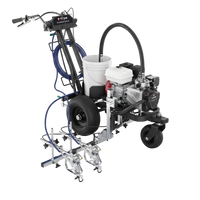


















What is a gas pressure washer?
A gas pressure washer uses a gasoline engine to drive a pump that pressurizes water for cleaning. Compared with many electric units, a gas-powered model can be useful when a crew needs mobility, higher output, or extended operation away from a convenient electrical outlet. It is a tool for controlled surface cleaning, not a universal solution for every material or job.
The right model depends on the work, the water supply, the surface, and the way the machine will be transported and maintained. A professional painter may need a washer for surface preparation, while a maintenance team may clean equipment, concrete, or fleet surfaces. A homeowner may use one less often and place more weight on storage and starting convenience.
Before comparing machines, review the surrounding surface-preparation supplies in the Integrity Supply Painting collection. Cleaning is often one step in a larger workflow that includes masking, patching, priming, coating, and protecting the finished surface.
Call (866) 918-0300 to discuss a gas pressure washer and surface-preparation supplies for your job.
How to choose a gas pressure washer for the job
Start with the job description instead of the largest pressure number on a product label. Write down what you will clean, how often you will use the machine, where the work will take place, and what water and power conditions are available. Then compare machines using the specifications that affect actual performance.
- Identify the surfaces. Concrete, masonry, equipment, vehicles, painted wood, siding, and outdoor furniture do not all tolerate the same pressure or technique. A high rating does not make a machine appropriate for a delicate surface.
- Estimate the workload. Occasional small-area cleaning has different needs from daily contractor work, repeated commercial cleaning, or large flat surfaces. Consider total hours per week, not just the size of one project.
- Match the water supply. Confirm the required flow, inlet connection, hose length, and available supply. A machine cannot perform as expected if the source cannot provide the water volume it needs.
- Plan the work location. Gas engines produce exhaust and should be operated only in the open air or in locations permitted by the manufacturer with adequate ventilation. Never run one in a home, garage, enclosed trailer, crawl space, or other area where carbon monoxide can collect.
- Check transport and storage. Wheel size, handle design, lifting points, fuel handling, freeze protection, and storage space matter as much as the pump rating for a mobile crew.
Keep the pressure washer manual and the surface manufacturer's instructions available. If a coating, siding material, sealant, or equipment label gives a lower cleaning limit, follow the lower limit. Test a small, inconspicuous area before committing to a full pass.
Gas pressure washer PSI and GPM: what to compare
PSI means pounds per square inch, a measure of water pressure. GPM means gallons per minute, a measure of water flow. Both numbers matter. PSI affects the force available at the nozzle, while GPM affects how much water moves across the surface and how quickly loosened soil can be rinsed away.
Do not choose only by maximum PSI. A machine advertised with a high peak number may not deliver that number continuously under the conditions of your work. Compare the operating or rated pressure, the flow rate, the nozzle options, and the manufacturer's intended applications. Verify whether any stated peak rating is different from the working rating.
| Specification | What to ask | Why it matters |
|---|---|---|
| Working PSI | What pressure is available during normal operation? | Helps match cleaning force to the surface and task. |
| Maximum or peak PSI | Is this a short-duration rating or the normal working value? | Prevents comparing machines by an impressive number that does not describe routine use. |
| GPM | How much flow does the pump deliver, and what supply does it require? | Supports rinsing speed and determines whether accessories will work properly. |
| Nozzle range | Which spray tips are included, and what surfaces are they intended for? | Lets the operator adjust the spray pattern and distance for the job. |
| Temperature rating | Is the unit for cold-water use, and are hot-water applications excluded? | Protects the pump, seals, hose, and operator from an incorrect setup. |
Pressure and flow are not permission to work close to a surface. A narrow tip held too near paint, wood, mortar, or a vehicle finish can cause damage even when the machine is within its published rating. Begin with a wider spray pattern, greater distance, and the lowest effective pressure. Increase control only after the test area shows that the surface is tolerating the process.
Gas pressure washer engine and pump considerations
The engine supplies the power that drives the pump, but engine size alone does not tell you how a machine will perform. Compare the complete system: engine, pump type, pressure, flow, duty guidance, starting system, fuel requirements, and service support.
Engine starting and controls
A pull-start engine may be simple and dependable when maintained, but it requires room and technique for starting. An electric-start configuration can be convenient for frequent use, though it adds a battery and charging considerations. Read the starting instructions and confirm that the control layout is practical for the operator who will use it.
Keep fuel fresh according to the engine manufacturer's guidance. Use the specified fuel, avoid spills, and let the engine cool before refueling. Store fuel only in an approved container and in accordance with local requirements. Do not smoke or create an ignition source near fuel or a recently refueled machine.
Pump and duty cycle
The pump is the part that pressurizes the water, so its construction and service guidance deserve attention. A machine intended for occasional homeowner use may have a different duty cycle from one intended for professional cleaning. Ask how long the unit may run continuously, how it should be cooled, whether the water must remain connected while the engine runs, and which parts can be serviced.
Never run a pump without the water flow required by the manual. Do not leave a running machine in bypass longer than the manufacturer allows. Trapped or recirculating water can heat up and damage pump components. If the machine behaves differently from normal, shut it down and diagnose the issue before continuing.
Gas pressure washer mobility, water supply, and accessories
A powerful machine is only useful if the crew can position it safely. Check the frame, wheels, handle, center of gravity, and hose routing before buying. A heavy unit may roll well on a flat slab but be difficult to lift over a curb or move across uneven ground. Make sure the operator can control the machine without pulling on the high-pressure hose.
Water source and hose setup
Confirm the inlet size and the minimum water supply required by the washer. Use a clean, adequately sized supply hose and keep the inlet filter in place if the manual specifies one. A restricted supply can cause poor performance or pump damage. Do not assume that a garden-hose connection automatically means every hose, adapter, or faucet setup is suitable.
On the high-pressure side, match the hose, gun, wand, fittings, and nozzles to the machine's pressure and temperature ratings. A connection that threads together can still be unsafe if one component is under-rated. Inspect the hose for cuts, bulges, abrasion, exposed reinforcement, or damaged couplings. Relieve pressure according to the manual before disconnecting any component.
Spray tips and attachments
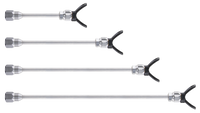
Different spray tips change the pattern and concentration of the water. Use only tips that are correctly sized and rated for the machine. A surface cleaner may improve consistency on an appropriate flat surface, while an extension wand may change balance and reach. Detergent injectors and chemical nozzles also have compatibility limits. Confirm the accessory instructions instead of assuming that a universal label covers every machine.
For paint preparation, the pressure washer is only one part of the system. Cleaning may reveal loose coating, damaged substrate, failed caulk, or areas that require patching before priming. Allow the surface to dry as required by the coating manufacturer and complete repairs before applying new material.
Gas pressure washer safety for contractors and homeowners
Pressure washers combine moving equipment, pressurized water, fuel, exhaust, noise, and debris. Read the machine manual and use the protective equipment required for the task. Eye and face protection, hearing protection, gloves, slip-resistant footwear, and suitable work clothing may all be appropriate depending on the spray, surface, detergent, and debris. Integrity Supply's Safety collection can help you plan the protective equipment portion of the workflow.
- Control exhaust. Operate the gas engine outdoors and away from doors, windows, vents, and air intakes. Carbon monoxide has no reliable odor and can accumulate quickly in enclosed or partially enclosed areas.
- Control the spray. Keep the wand pointed away from people, animals, electrical equipment, and fragile surfaces. Never use the spray to clean clothing or footwear while they are being worn.
- Control the hose. Route hoses to reduce trip hazards and keep them away from hot engine parts, sharp edges, vehicles, and active traffic paths.
- Control the shutdown. Follow the manual for stopping the engine and relieving water pressure. Do not pull a connection apart while the line is pressurized.
- Control chemicals. Use only detergents or cleaning products approved for the machine and surface. Follow the product label, ventilation guidance, dilution instructions, and disposal requirements.
- Control the surface. Test first, use a suitable nozzle and distance, and stop if the coating, joint, wood fiber, or finish begins to erode.
Painting contractors should also plan for ladders and elevated work. A pressure washer can create strong reaction force and a wet, slippery work area. Keep both feet stable, avoid using the wand from an unsafe ladder position, and use a method that lets the operator maintain control without overreaching.
Gas pressure washer maintenance and storage
Routine care protects both performance and downtime. Before each use, inspect the frame, wheels, fuel lines, engine controls, pump, hose, gun, wand, fittings, and spray tip. Replace damaged pressure-bearing components. Do not patch a high-pressure hose with tape or continue using a gun with a cracked body or trigger that does not reliably stop flow.
Keep the inlet screen and spray tip clear according to the manual. Flush the system when the manufacturer's instructions call for it, especially after using detergent. Do not insert improvised objects into a nozzle or force a connection that does not fit. Use the specified service parts where available.
For storage, protect the machine from rain, freezing temperatures, impact, and unauthorized fuel access. Follow the engine guidance for fuel stabilization or draining. If freezing conditions are possible, follow the pump manufacturer's winterization procedure. Keep the hose dry and coiled without sharp kinks, and store accessories where they will not be crushed.
Record inspections and service for a contractor fleet. A simple log can show when oil, filters, spark plugs, seals, hoses, or nozzles were checked. It also helps the next operator know which pressure, tip, detergent, and surface conditions were used successfully.
Common gas pressure washer buying mistakes
- Buying the highest PSI: More pressure is not automatically better. Match the working rating to the surface and the task.
- Ignoring GPM: A high pressure number does not replace the flow needed for rinsing or for an attachment's operating range.
- Forgetting the water source: A pump cannot create a reliable supply from a faucet or hose that cannot provide the required flow.
- Using it indoors: Exhaust can create a fatal carbon monoxide hazard. A partially open garage or trailer is not a safe substitute for outdoor operation.
- Assuming every accessory fits: Verify pressure, temperature, connection, flow, and intended use for each hose, gun, wand, tip, and attachment.
- Skipping the test area: High-pressure water can remove paint, damage wood, open mortar joints, or mark concrete when used incorrectly.
- Underestimating maintenance: Gas engines and pumps need scheduled care, fuel management, freeze protection, and inspection before use.
Gas pressure washer FAQs
Are gas pressure washers better than electric pressure washers?
Neither type is best for every job. A gas unit can suit outdoor work that needs mobility, longer operation, or output beyond the available electrical setup. An electric unit may be simpler for smaller jobs near a suitable outlet. Compare the surface, duty cycle, water supply, noise, exhaust, storage, and maintenance requirements before choosing.
What PSI is good for a gas pressure washer?
The right PSI depends on the surface and cleaning task. Concrete and durable equipment may tolerate more pressure than painted wood, siding, vehicles, or old masonry. Compare the working pressure and flow with the manufacturer's instructions for the surface, then begin with a wider pattern, greater distance, and the lowest effective setting.
Is a gas pressure washer suitable for paint preparation?
It can be useful for removing compatible dirt, chalk, and loose material from suitable surfaces, but it does not replace surface inspection or repair. Test first, avoid forcing water behind siding or into joints, let the surface dry, and complete patching, caulking, priming, or other preparation before coating.
Can I use a gas pressure washer in a garage with the door open?
No. A garage is an enclosed or partially enclosed space where carbon monoxide can accumulate. Operate the engine outdoors and keep exhaust away from doors, windows, vents, and air intakes. Follow the machine manufacturer's location and ventilation instructions.
How long should a gas pressure washer last?
Service life depends on the model, workload, water quality, storage, maintenance, and whether the machine is operated within its ratings. A maintenance log, clean water supply, correct fuel care, proper winterization, and timely replacement of worn hoses, seals, and nozzles can help reduce avoidable failures.
What should I compare before buying a gas pressure washer?
Compare working PSI, GPM, engine starting method, pump and duty guidance, water requirements, temperature rating, hose and fitting compatibility, included spray tips, mobility, noise, safety instructions, service parts, warranty, and storage needs. The best model is the one that meets the real job requirements without being unnecessarily difficult to control or maintain.
Need help planning the rest of a surface-preparation job? Browse the Painting collection or contact Integrity Supply about the supplies that fit your workflow.