


















Paint fumes, dust, mists, and vapors do not present the same exposure, so a respirator choice should never begin with a product label alone. The work area, coating, application method, ventilation, and potential contaminants all shape the protection needed.
Review workplace safety supplies before choosing respiratory PPE
OSHA respirator requirements for painting and construction center on hazard assessment, feasible engineering controls, and a suitable respiratory protection program. OSHA's standard applies to construction as well as general industry. It calls for enclosure, ventilation, substitution, or other controls before relying on respirators when those controls are feasible. When respirator use is necessary, employers must provide suitable equipment and manage the required program. OSHA 1910.134
That makes compliance a process rather than a one-time purchase. Start by examining the task and materials, then connect the findings to employer responsibilities, medical evaluation, fit testing, training, and maintenance before selecting PPE.
How to Meet OSHA Respirator Requirements for Painting and Construction
Short answer: OSHA respirator requirements for painting and construction begin with identifying the airborne hazard and controlling it at the source. When feasible engineering controls do not adequately control exposure, or while those controls are being put in place. An appropriate respirator must be used under a compliant respiratory protection program.
OSHA 1910.134 applies to general industry and construction, among other covered sectors. OSHA also lists respiratory protection in its construction standards as 1926.103. The applicable standard is a starting point for understanding employer duties, but it is not a substitute for evaluating a particular jobsite, coating, work method, or exposure. Requirements can also involve other standards tied to the work, such as ventilation or lead controls.
Start with the hierarchy of controls
The standard prioritizes preventing atmospheric contamination through feasible engineering controls. Examples include enclosing or confining the operation, using general or local ventilation, and substituting a less toxic material. These measures address the hazard before relying on personal protective equipment.
Respirators have an important role when effective engineering controls are not feasible or while they are being implemented. That does not mean selecting a mask from a product label and treating the purchase as proof of compliance. The employer must provide a respirator when it is necessary to protect employee health and must ensure that it is applicable and suitable for its intended purpose.
Apply the rule to the actual painting or construction task
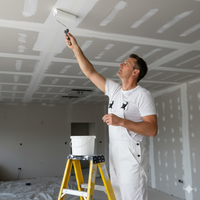
Painting work can involve different operations and exposure concerns. Spray application and hand application may create different conditions, including inhalation, skin exposure, and fire or explosion hazards. The chemical, application method, ventilation, enclosure, and surrounding work all matter. A qualified person should evaluate the operation and chemicals before selecting PPE.
For employers, the next step is establishing and maintaining the required respiratory protection program for employees who must use respirators. This section explains the foundation of that process. It provides general information, not a site-specific compliance determination, legal advice, or medical advice.
Read OSHA's respiratory protection standard for the governing requirements, then evaluate the specific job with qualified safety support when the hazard or control strategy is uncertain.
What a Jobsite Hazard Assessment Should Examine
Before painting begins, evaluate the work area, the task, and the materials involved. OSHA's painting guidance states that painting operations require preplanning and evaluation for potential hazards before work starts. The assessment should be specific to the operation rather than based on a generic assumption that all paint work creates the same exposure.
Compare the task and application method
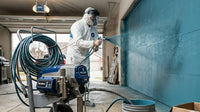
Spray application and hand application can create different exposure profiles. Spraying may produce mists and increase the opportunity for airborne exposure, while brushing or rolling can still involve inhalation, skin contact, or absorption from liquids and vapors. The assessment should also consider whether the coating contains components such as epoxies or isocyanates, which OSHA identifies as potential sources of severe allergic reactions.
Look at the full work process, including mixing, transferring, application, cleanup, and waste handling. Consider the amount and concentration of each contaminant, how long workers may be exposed, who else is in or near the area, and whether the task changes when conditions shift.
Check ventilation, enclosure, and other controls
Evaluate whether the work can be enclosed or confined, whether general or local ventilation can control airborne contaminants, and whether a less hazardous material or method is feasible. OSHA's respiratory protection standard places feasible engineering controls ahead of relying on respirators. Respirators may be needed when effective controls are not feasible or while those controls are being implemented.
Finally, a qualified person should select PPE based on the specific operation and chemicals used. A respirator cannot be selected from the paint label alone. The label is one input, but the decision also depends on the contaminant, concentration, application method, ventilation, exposure duration, and the applicable respiratory protection program. OSHA's painting eTool identifies inhalation, skin exposure, fire, and explosion concerns that may need to be addressed together. Employers should obtain qualified safety assistance when the hazard or required protection is uncertain.
What Employers Must Include in a Respiratory Protection Program
When respirator use is required, the employer is responsible for establishing and maintaining a written respiratory protection program. OSHA requires the program to cover each employee who must use a respirator, not just the equipment issued for a particular job. The employer must also provide a respirator when it is necessary to protect an employee's health and ensure that the selected equipment is applicable and suitable for its intended purpose. See the requirements in OSHA 1910.134.
A written program and responsible administrator
The program should describe how the company evaluates respiratory hazards, selects equipment, and controls exposure. It must identify a qualified program administrator who has the knowledge and authority to oversee the program. That person is responsible for implementing the written procedures, coordinating required evaluations and training, and checking whether the program continues to work as intended.
Medical evaluation and fit testing
Employees who are required to use respirators need a medical evaluation before required use. The evaluation is handled by a physician or other licensed health care professional under the standard's process. A tight-fitting respirator also requires fit testing with the specific make, model, style, and size the employee will wear. Fit testing helps confirm a proper face seal, but it does not replace hazard assessment or correct respirator selection.
Training, cleaning, storage, and maintenance
Employees must know why protection is needed, how to use the respirator, how to perform seal checks, and how to recognize a poor seal or other problem. The program also needs procedures for cleaning, disinfecting, storing, inspecting, repairing, and replacing equipment. Shared or reusable respirators need particular attention to hygiene and condition before use.
Program evaluation
Employers should evaluate the program regularly and correct deficiencies. That review can consider employee feedback, changes in products or processes, equipment condition, fit-testing results, and whether work practices match the written procedures. OSHA's standard sets the framework, while the actual procedures depend on the hazards and conditions at the jobsite. This overview is general information, not a site-specific legal or medical determination.
How Medical Evaluation and Fit Testing Work
Before an employee uses a required respirator, the employer must follow a sequence that connects the work hazard to the worker, the equipment, and the jobsite program. The process below is a practical overview, not an individualized medical determination.
- Complete the hazard assessment and choose the respirator type. Start with the contaminant, expected exposure, task, and available controls. OSHA places feasible engineering controls such as enclosure and ventilation ahead of respirator use. If a respirator remains necessary, the employer must provide equipment that is applicable and suitable for its intended purpose. See the OSHA respiratory protection standard.
- Obtain a medical evaluation before required use. An employee must be medically evaluated before being fit tested or required to use a respirator at work. The evaluation is completed using the process specified by the respiratory protection standard and must be performed confidentially by a physician or other licensed health care professional. It is not a diagnosis that a general article can make, so workers should raise health questions with the qualified provider handling the evaluation.
- Select the specific model and size. Medical clearance does not identify the right filter, cartridge, facepiece, or supplied-air system for a coating, dust, vapor, or other hazard. Those choices remain tied to the hazard assessment and the employer's written program. Different respirator designs also create different fit and use considerations.
- Perform fit testing for a tight-fitting respirator. Fit testing checks whether the selected tight-fitting facepiece seals to that individual user's face. It is not a substitute for selecting the correct protection. The NIOSH respirator guidance also distinguishes fit testing from a user seal check, which the wearer performs each time the respirator is put on.
- Train, check the seal, and reassess when circumstances change. Training should cover use, limitations, inspection, storage, cleaning, and how to recognize a poor seal or other problem. The wearer should complete the required seal check before entering the exposure area. Reassessment is appropriate when the respirator, workplace, task, hazard, or worker's ability to use the equipment changes. Keep the program, medical, fit-test, and training records required by the applicable standard.
How to Choose PPE for Paint, Spray, Dust, and Vapor Hazards
Start with the hazard, not the label on a package. OSHA painting guidance identifies inhalation, skin contact, absorption, fire, and explosion concerns, and notes that spray work can involve liquids, vapors, or mists. Epoxies and isocyanates also deserve specific attention because they may cause severe allergic reactions. A qualified person should evaluate the operation and chemicals before selecting PPE. See the OSHA painting eTool for the source guidance.
| Work or hazard example | Selection questions | Important limit |
|---|---|---|
| Brush or roller application | What liquids or vapors are present? Could the material contact skin or be absorbed? | Do not assume a dust mask addresses vapor or skin exposure. |
| Spraying coatings, including epoxy or isocyanate products | What is the contaminant, concentration, spray pattern, ventilation, and required protection level? | A filter or cartridge must match the contaminant and the applicable requirements. A product name alone is not proof of suitability. |
| Sanding, grinding, or construction dust | What material creates the dust? Are there additional hazards such as coatings, lead, silica, or solvents? | N95, P95, and P100 designations do not independently establish that a respirator is suitable for every task. |
| Unknown, oxygen-deficient, or potentially highly hazardous atmosphere | Can the atmosphere be characterized safely, or is breathing air from an independent source required? | Do not select an air-purifying respirator for an atmosphere it cannot safely address. |
Air-purifying and atmosphere-supplying respirators
Under OSHA 1910.134, an air-purifying respirator passes ambient air through a filter, cartridge, or canister that removes specific contaminants. An atmosphere-supplying respirator provides breathing air from a source independent of the surrounding atmosphere, including supplied-air respirators and self-contained breathing apparatus. That distinction matters when the contaminant, concentration, oxygen level, or emergency potential exceeds what air-purifying equipment can address.
Integrity Supply's jobsite respiratory safety supplies and respirator kit for paint projects can be starting points for comparing equipment. They are not hazard assessments or compliance recommendations. Confirm the contaminant and applicable employer respiratory-protection program before choosing any product, and consult a qualified safety professional when the required protection is uncertain.
What Painters and Construction Crews Should Document
A respiratory protection file should show how the employer identified the hazard, selected protection, and maintained the program. OSHA's respiratory protection standard provides the framework, but the exact records needed can vary with the applicable standard, work process, chemicals, and jobsite conditions. Treat this as a practical starting checklist, not legal advice.
- Hazard assessment: Record the task, materials, likely contaminants, exposure conditions, ventilation, and engineering or administrative controls considered. Note the basis for deciding that respiratory protection is necessary.
- Written program: Keep the current respiratory protection procedures, including how respirators are selected, used, maintained, and evaluated. Identify the person responsible for administering the program.
- Medical evaluation: Document that required users completed the appropriate medical evaluation process before required respirator use. Protect medical information and limit access to people who need it.
- Fit testing: Maintain fit-test records for employees who use tight-fitting respirators. The record should identify the worker, respirator configuration, and relevant test information.
- Training: Record instruction on hazards, limitations, donning and removal, seal checks, inspection, maintenance, and what to do if conditions change.
- Inspection and maintenance: Keep inspection, cleaning, repair, and replacement records where they help demonstrate that equipment is kept in usable condition.
- Storage: Document storage expectations and any site checks needed to prevent contamination, damage, or loss of function.
- Program review: Record evaluations, worker concerns, incidents, changes in materials or tasks, and corrective actions. A review should lead to updates when the work or hazard changes.
Do not use a completed checklist as proof that a program fits every exposure. Employers should compare their records with the applicable OSHA requirements and obtain qualified safety or regulatory advice when the hazard, documentation duty, or protection selection is uncertain.
How Integrity Supply Can Support a Safer PPE Buying Process
Once hazards are identified and the required protection is selected, product research becomes more focused. Integrity Supply can help teams compare equipment and related jobsite supplies. It does not replace a qualified hazard assessment, medical evaluation, fit testing, or program administration.
Start with the jobsite respiratory safety supplies collection to review available categories and equipment types. For painting work, the painting supplies and tools collection can help you gather related materials for the task. A product page, such as a respirator kit for paint projects, may be a useful shopping reference after the responsible employer or safety professional has determined what protection is needed.
Keep the boundaries clear during that review. Product listings do not establish OSHA suitability, compliance, stock, or availability. A respirator name, rating, or intended-use description does not prove that it matches a particular coating, contaminant, concentration, work method, worker, or site condition. Integrity Supply should not be treated as a safety consultant, and the catalog should not be used as a substitute for the applicable OSHA standard or the employer's written program.
Before ordering, compare the product details with the documented selection decision, confirm sizing and replacement needs, and verify availability through the appropriate sales channel. If the hazard or required protection remains uncertain, pause the purchase and consult a qualified safety professional. The following FAQs address common questions that come up when applying these requirements on painting and construction jobsites.
Frequently Asked Questions
Are respirators required for painting?
Sometimes. The employer must first consider feasible controls such as enclosure, ventilation, or substituting a less toxic material. When effective controls are not feasible or are still being implemented, OSHA requires appropriate respiratory protection for the hazard. Painting tasks can involve inhalation, skin exposure, fire, and explosion risks, so the answer depends on the coating, application method, work area, and exposure assessment. OSHA 1910.134
Does OSHA consider an N95 a respirator?
Yes, an N95 is a type of particulate filtering respirator. However, the label alone does not establish that it is appropriate for a particular paint, vapor, mist, gas, or construction exposure. Selection must match the identified contaminant and required protection, and a qualified person should evaluate the operation and chemicals involved. OSHA painting guidance
What is required before using a respirator at work?
For required respirator use, the employer must have an applicable respiratory protection program. The process includes a medical evaluation before required use, fit testing for tight-fitting respirators, training, and procedures for cleaning, storage, maintenance, and program evaluation. Fit testing does not replace hazard assessment or correct filter, cartridge, or canister selection. OSHA 1910.134
Who selects respiratory PPE for a painting job?
Selection should be based on the specific operation, chemicals, exposure conditions, and applicable requirements. OSHA painting guidance says a qualified person should select PPE because spray application and hand application can present different hazards. Employers remain responsible for providing equipment that is applicable and suitable for its intended purpose, not simply choosing a product by name or appearance. OSHA painting guidance
Ready to Review Your PPE Options?
Choosing respirators and related protective equipment starts with understanding the hazards, task conditions, and requirements that apply to your site. Review Integrity Supply's workplace safety and painting supply categories as a practical starting point for planning purchases, then confirm product selection and job-specific requirements with the responsible safety professional.