























Knowing how to dispose of paint thinner safely starts with treating leftover solvent as a potentially hazardous household product, not ordinary sink or yard waste. The right route depends on the product label and the rules where you live. In many places, liquid paint thinner belongs at a household hazardous-waste collection site, while some local programs give different instructions for residue or an empty container. Check with your local waste authority before putting any material in the trash.
Call Integrity Supply at (866) 918-0300 about painting supplies
How to dispose of paint thinner: what should you check first?
Do not start by pouring, mixing, or transferring the thinner. First identify the product and determine whether it is still liquid, has settled, or is only residue on a container or tool. Then check the label and your local waste authority’s current directions. These steps matter because “paint thinner” can refer to different solvent products, and collection programs do not all accept materials in the same way.
- Read the container label. Look for disposal, storage, first-aid, fire, and spill instructions. Follow any product-specific directions, including warnings about ventilation, protective equipment, and incompatible materials.
- Identify your local program. Search your city, county, or state waste agency’s official information for household hazardous waste (HHW), paint thinner, or solvent. Confirm whether the program accepts liquid thinner, what container it requires, its hours, and whether an appointment or drop-off limit applies.
- Describe the material accurately. Tell the program whether you have liquid solvent, settled sludge, a small amount of residue, contaminated absorbent, or an empty container. Do not assume those categories share one disposal rule.
- Keep it closed and contained while you wait. If the original container is intact, keep the product in it with its label readable. Store it upright and away from heat, sparks, flames, children, and pets.
- Use the destination the authority confirms. Take accepted liquid to the designated HHW location as directed. Do not leave it at a site that has not confirmed it accepts the material.
For example, King County, Washington, directs residents to bring liquid paint thinner to a hazardous-waste collection site and gives separate instructions for sludge. That is useful local guidance, not a nationwide rule. Cornell’s environmental health and safety guidance likewise identifies paint thinner as material to manage through a hazardous-waste program. Use these references to understand why the product needs care, then rely on the waste authority serving your address for the final instructions.
Read King County’s paint thinner disposal guidance and Cornell’s guidance on paint and paint thinner.
What should you never do with paint thinner?
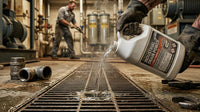
Paint thinner should not go down a sink, toilet, storm drain, or onto the ground. Do not pour it into a street drain, septic system, creek, or other waterway. It can contaminate places that household drains lead to, and the receiving wastewater or waste system is not a substitute for a hazardous-waste program.
- Do not pour liquid thinner into the trash. A bag or bin does not make liquid solvent safe to discard. Ask the local authority how to handle liquid and residue.
- Do not put liquid thinner in curbside recycling. Do not recycle a container that still holds product unless the local program specifically says how to prepare it.
- Do not mix it with paint, oil, gasoline, another solvent, or other waste. Mixing can create a less identifiable waste stream and may make it harder or unsafe for a program to accept.
- Do not pour it onto soil, gravel, or pavement. Absorption into the ground is not safe disposal.
- Do not burn it or use open flame to make it disappear. Solvent vapors can ignite. Keep the product away from sparks, pilot lights, smoking, hot tools, and other ignition sources.
- Do not leave it open to evaporate. Evaporation releases vapors and is not an approved shortcut for disposal.
- Do not rely on another city’s rules. A method accepted by one household waste program may be prohibited in another area.
Ann Arbor’s recycling guidance also says not to put paint thinners or removers down the sink or sewer drain and not to place them or their containers in curbside recycling. Since local instructions differ, check your own waste authority’s directions for the specific product and container you have.
Review Ann Arbor’s guidance on paint thinners and removers.
Can you reuse paint thinner before disposal?
Sometimes, a portion of used thinner can be saved for another compatible cleanup task, but reuse is not a disposal method and should never override the product label. If the thinner is still usable, keeping it for the same type of work can reduce waste. Do not assume that cloudy or settled solvent is ready to reuse, and do not use solvent on a surface or material unless the product label says it is suitable.
If you are considering reuse, use a cautious process:
- Confirm the product and intended use. Check the label to make sure the thinner is suitable for the paint or cleanup job. Different coatings and solvents are not interchangeable.
- Do not combine products. Keep solvents of different types and unknown contents separate. Never add fresh thinner to an unidentified container of used liquid.
- Keep the liquid in a compatible, closable container. The original labeled container is preferable when it is sound and has room to close securely. Do not use food or drink containers, or any container that could be mistaken for one.
- Label any permitted transfer. If the label or local safety guidance permits transfer, preserve the product identity and hazard information. Do not leave a container with an unknown or misleading label.
- Use the saved portion only for a label-approved purpose. Stop using it if you cannot identify it or are unsure whether it is suitable. Ask the local HHW program how to manage the remainder.
Settling may separate some paint solids from liquid, but that does not make the sludge ordinary garbage everywhere. King County’s directions distinguish sludge from remaining liquid and provide a local route for each. Other jurisdictions may handle both differently. Before separating material or discarding any part, confirm the steps with your local program. Do not pour the liquid into a new container just to avoid taking the original can to HHW unless the program instructs you to do so.
A paintbrush or other tool with solvent on it also needs product-specific care. Follow the thinner label and the tool or coating instructions. Keep used cleanup liquid contained, and ask the local authority about residue and absorbent materials rather than rinsing solvent into a drain. For future jobs, select compatible painting brushes and follow the coating manufacturer’s cleanup directions.
How should you store paint thinner until collection?
Good storage reduces the chance of a spill, accidental exposure, or fire while you arrange disposal. Keep the container closed except when you are actively using it. Store it upright in a cool, dry, well-ventilated place, away from heat and ignition sources. Follow the label if it gives more specific storage instructions.
- Keep the original label legible. A collection site needs to know what the product is. If the label is unreadable, do not guess at the contents; contact the local HHW program for instructions.
- Use secondary containment when practical. A stable, chemical-compatible tray or bin can help contain a small leak. It does not replace a sound, closed product container.
- Separate it from incompatible products. Keep solvents away from food, animal feed, medicines, and materials that could react with them. Do not store different liquids together in one container.
- Limit access. Keep the container out of reach of children and pets, and do not store it where it could be knocked over.
- Do not store it in an unventilated living area or near a flame. Follow the label’s ventilation and fire precautions, including around furnaces, water heaters, and other ignition sources.
- Keep soaked materials separate. Do not leave solvent-wet rags or absorbent material in a pile. Follow the product label and local fire or waste authority’s directions for handling and disposal.
If the original can is rusty, leaking, bulging, or otherwise damaged, do not move or repackage it casually. Keep people away, avoid ignition sources if it is safe to do so, and contact the local HHW program or fire department for instructions. If you cannot safely control the situation, move away and contact emergency services.
For a painting project, protect nearby surfaces with an appropriate drop cloth and use supplies according to their product directions. Keep any solvent container in its designated storage area, not on a work surface where it can tip or be confused with another liquid.
What should you do if paint thinner spills?
Respond to a spill based on its size, location, ventilation, and the product label. Do not put yourself at risk to save a container or clean up a spill. If there is a large spill, strong or worsening fumes, fire risk, exposure, or any chance that solvent reached a drain or waterway, keep others away and contact your local emergency or environmental response service. Follow the label’s first-aid and emergency directions.
For a small spill that the label indicates you can safely manage:
- Stop work and remove ignition sources only if you can do so safely. Do not switch electrical equipment on or off in a vapor-filled area. Do not smoke or use a flame.
- Keep people and pets away. Avoid breathing vapors. Ventilate the area only in a way that is safe and consistent with the product label; do not direct fumes into an occupied space.
- Use the protective equipment specified by the label. Do not handle the liquid with bare hands or use an improvised cleanup method that could increase exposure.
- Prevent the spill from spreading if it is safe. Do not let it run to a floor drain, soil, or outdoor water. Do not rinse it away with water.
- Collect the material only if the label and your ability allow it. Use an appropriate absorbent only when you can do so safely. Keep used absorbent contained and ask your waste authority how it must be handled.
- Arrange proper disposal. Ask the local HHW program where to take collected solvent and contaminated cleanup material. Do not put it in curbside recycling or ordinary trash unless the authority expressly permits that specific material.
If thinner contacts skin or eyes, or someone breathes a significant amount of vapor, follow the product label’s first-aid instructions and seek appropriate medical or poison-control advice. Do not delay emergency care when symptoms are severe. Keep the container or a photo of its label available so responders can identify the product.
How do local hazardous-waste rules affect disposal?
There is no single household disposal instruction that applies to every address in the United States. Cities, counties, and states may operate different collection programs, set different limits, and distinguish between liquid solvent, sludge, empty cans, and cleanup debris. A program may also limit what it accepts from households or direct businesses to a different service. Confirm that you are using instructions for your location and type of waste.
Before a trip, check these details on an official local government or waste program page, or call the program:
- Does the site accept the exact product, and is it for household quantities only?
- Does it accept liquid thinner, settled sludge, residue, empty containers, and absorbent material?
- Must the product remain in its original container, or does the site give different transport instructions?
- Are there limits per visit, fees, appointments, seasonal events, or restricted hours?
- Should you keep materials separate, and does the site ask you to place containers in a particular part of the vehicle?
- Is there a specific instruction for a leaking, unlabeled, or unusually large container?
Use current instructions rather than relying on an old flyer, a neighbor’s experience, or a general article. If the website does not answer your question, call before transporting the material. Do not mail or ship paint thinner unless a qualified authority and the applicable shipping rules explicitly allow it.
Some collection programs provide separate directions for other paint-related products. Do not apply advice for latex paint, paint, paint remover, or mineral spirits to a container of thinner unless the label and local authority confirm that it applies. When the product identity is unclear, keep it closed and ask for help rather than combining it with a known solvent.
What should you do with an empty can, residue, or cleanup waste?
A container that looks empty may still have liquid, residue, or vapor inside. Do not puncture, crush, burn, or rinse a can to prepare it for recycling unless the local program specifically tells you to do so. Do not pour rinse water into a sink or onto the ground. The word “empty” can have a specific meaning in local waste instructions, so ask how the program classifies a can that has only a film or small amount left.
Keep the label and container together until you have a disposal direction. If the container is intact, keep its lid on and place it where it cannot tip. If the lid is missing or the can is damaged, do not improvise a closure that could react with the product or make the container unstable. Call the local HHW program and describe the condition. Staff can tell you whether to bring it in, use a collection event, or contact another service.
Cleanup materials need their own answer, too. A brush, rag, paper towel, or absorbent material may hold solvent even when it appears nearly dry. Do not assume that a small amount is harmless or that a tool can be rinsed in a household sink. Keep contaminated materials separate from ordinary recycling and ask the waste authority how to contain them. If the product label has instructions for used rags or absorbents, follow those instructions along with local requirements.
Likewise, do not combine several half-empty containers to make one “full” container. The products may differ, and mixing can make the contents harder to identify. Keep each product in its own labeled container and explain the number and condition of the containers when you call. If you cannot read the label, say that plainly instead of guessing from the can’s color or smell.
For households, a city or county HHW program may provide the correct route. Material from a painting business, maintenance operation, or other workplace may be subject to different handling requirements than household waste. Do not assume a household drop-off site will accept a contractor’s or employer’s material. Ask the program which category applies and whether you need a commercial waste provider. A waste authority can clarify its own acceptance rules; it cannot determine the product identity if you do not have that information.
When you call, be ready to give the product name, approximate amount, whether it is liquid or residue, and whether the container is damaged. You do not need to open a can to answer those questions. This small check can prevent an extra trip and help the site prepare for the material it accepts.
Which disposal route fits the material you have?
This table is a starting point for deciding what to ask about. It does not replace the label or the waste program’s rules. The local authority’s instructions control what you do with the material.
| What you have | What to do next | What not to assume |
|---|---|---|
| Liquid paint thinner | Keep it closed in its labeled container and confirm the accepted HHW drop-off route. | Do not pour it down a drain, onto the ground, or into ordinary trash. |
| Thinner with settled paint solids | Ask whether the local program wants the liquid and sludge handled separately and how. | Do not assume the settled portion can go in household garbage everywhere. |
| Small amount of residue in a can | Ask the waste authority how it defines an empty or residue-only container. | Do not place it in curbside recycling just because little liquid remains. |
| Damaged or leaking container | Keep people away and contact the HHW program or fire department for safe instructions. | Do not transfer it into an unmarked bottle or carry it in a passenger area without guidance. |
| Solvent-contaminated rag or absorbent | Keep it away from ignition sources and ask the local authority how to contain and dispose of it. | Do not leave it in a pile, rinse it into a drain, or assume it belongs in regular trash. |
How can you prepare for a paint job and reduce leftover solvent?
The safest disposal plan starts before the job. Estimate what the task requires, read the product label, and avoid opening more material than you need. Keep the lid on the thinner when it is not in use. Use only the amount specified for the coating or cleanup task, and do not pour leftover product back into a container if doing so could contaminate it.
Plan the work area so tools and cleanup materials have a designated place. Keep solvent separate from drinking water and other liquids. Keep a lid, compatible container, and the label’s safety directions close at hand. Use ventilation and protective equipment as directed, and keep children, pets, and other workers away from open containers.
When choosing paint supplies, also check the product directions for compatibility and cleanup. A brush, roller cover, or coating can require a different cleaning method. Integrity Supply carries painting items such as roller covers and painter’s tape; consult each item’s product details and the coating maker’s directions for the job. Buying a tool does not change the disposal rules for the solvent used with it.
Keep a short record of the product name, approximate amount, and the waste authority’s instructions. That makes it easier to answer questions at a drop-off site and helps prevent a mystery container from accumulating in the shop. If you discover an old can with no readable label, do not open it to identify the smell or contents. Ask the local program how it handles unknown household chemicals.
What questions should you ask before taking thinner to a collection site?
Calling ahead can prevent an unnecessary trip and avoid unsafe transport. Explain that the container holds paint thinner, give the product name if known, and describe its condition. Ask whether the site accepts it and exactly how to bring it. If your material is from a commercial job or workplace rather than household use, say so; the program may provide different instructions.
Before you leave, check that the lid is secure and the label is readable. Keep the container upright and protected from tipping during transport. Do not put it near food or passengers if you can avoid doing so. If you have multiple chemicals, keep each in its own original container and do not combine them. Follow any specific vehicle-loading instructions provided by the collection program.
At the site, follow staff directions and do not leave a container unattended. If staff decline the material, take it back only if they instruct you to do so safely, and ask for the correct alternative. Do not abandon it outside a closed facility.
Call Integrity Supply at (866) 918-0300 for help choosing painting supplies
How to dispose of paint thinner: frequently asked questions
Can I pour paint thinner down the sink?
No. Do not pour paint thinner into a sink, toilet, sewer, or storm drain. Contact your local household hazardous-waste program for the disposal route. Ann Arbor’s recycling guidance specifically says not to put paint thinners or removers down sink or sewer drains, and your local authority can confirm the rule for your address.
Can paint thinner go in the regular trash?
Do not put liquid paint thinner in ordinary trash. Rules for sludge, residue, and containers vary by location. For example, King County gives separate local directions for sludge and liquid thinner. Ask your own waste program how to handle each part instead of applying another county’s instructions.
Can I leave paint thinner outside to evaporate?
No. Do not leave the can open or spread thinner outside to evaporate. This releases vapors and creates avoidable exposure and fire risks. Keep it closed and follow the label and local HHW program’s disposal instructions.
Can I reuse paint thinner that has been used to clean a brush?
Possibly, if the product remains identifiable and its label supports the intended use. Keep it separate from other products and in an appropriately closed, labeled container. Do not use an unknown or contaminated solvent, and ask the local authority how to dispose of any remaining liquid or settled solids.
What if I do not know what is in the container?
Do not open it, smell it, mix it with another product, or put it in the trash. Keep it contained if safe, keep people away, and contact your local HHW program for instructions. If the container is leaking or there is an immediate hazard, move away and contact the appropriate emergency service.
When in doubt, keep paint thinner closed, away from heat and ignition sources, and out of drains and ordinary recycling until your local waste authority tells you how to handle it. The product label and the rules for your location determine the safe final step.