






















Choosing a sprayer starts with the material, the surface, and the control your job requires. A manual compression unit can be practical for targeted application and routine maintenance, while powered airless equipment belongs to a different category and workflow.
Need help choosing a pump sprayer? Contact Integrity Supply to confirm product fit and compatibility before ordering.
A pump sprayer is useful for applying compatible liquids in a controlled, portable way when you need manageable coverage rather than an airless paint system. The right choice depends on the product label, manufacturer specifications, tank capacity, nozzle or tip, and the work area.
Integrity Supply's spraying collection includes sprayers, tips, and pump or valve parts, but a listing does not by itself confirm current availability or suitability for every material. For help checking product fit, compatibility, or ordering details, contact Integrity Supply.
Before comparing capacities and features, it helps to define what this equipment is designed to do and where it fits into a contractor's, maintenance team's, or DIY customer's workflow.
What Is a Pump Sprayer Used For?
A pump sprayer is good for applying a controlled amount of a liquid over a targeted area when the product label permits spray application. Common uses include spot treatments, light cleaning solutions, surface wetting, and certain coatings or maintenance products. The label and the sprayer manufacturer's specifications determine whether a particular liquid is appropriate. Do not assume that a tank is suitable for every chemical simply because it can hold liquid.
Most manual pump sprayers are compression sprayers. You fill the tank, close it, and use a hand pump to build pressure in the tank. When you open the wand or trigger, that stored pressure pushes liquid through the tip. This setup can be useful for treating a small area, applying a solution across a work zone, or handling routine maintenance without connecting powered equipment.
Typical jobs for a manual pump sprayer
- Spot treatments: Apply an approved lawn, garden, or maintenance product to a defined area instead of treating a larger surface.
- Cleaning tasks: Distribute a compatible cleaning solution where the label permits spray application. Follow the product directions for dilution, ventilation, and protective equipment.
- Coating and conditioning: Apply a compatible product when its instructions specifically approve the sprayer, material, and intended surface.
For a starting point, Integrity Supply's spraying equipment and supplies collection includes sprayers, tips, and pump or valve parts. Treat collection listings as product discovery, then confirm the specific item's instructions before filling the tank.
How is a pump sprayer different from an airless sprayer?
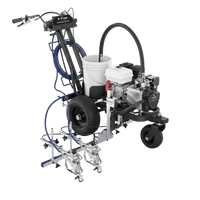
A compression pump sprayer relies on manually generated tank pressure and is generally selected for smaller, controlled applications. A powered airless paint sprayer is a separate equipment category designed to pump coating under pressure through specialized components. The two systems are not interchangeable. If the job calls for an airless paint sprayer, use equipment specified for that coating and application rather than substituting a handheld pump sprayer.
How Do You Choose the Right Pump Sprayer Capacity?
Capacity should match the amount of work you can carry, the distance between refills, and how consistently you need to maintain pressure. A larger tank may reduce interruptions, but it also becomes more demanding to lift, carry, and keep balanced as the liquid level changes. For ladder work, detail work, or jobs that require frequent repositioning, a smaller load can be easier to control. For ground-level work across a broader area, fewer refills may matter more.
| Job situation. | Capacity approach. | What to evaluate. |
|---|---|---|
| Small or detail-focused job. | Choose the smallest practical tank. | Light handling, precise movement, and easy repositioning. |
| Medium job or regular maintenance route. | Choose a middle-ground tank. | Refill frequency, carrying distance, and pressure consistency. |
| Larger ground-level job or crew workflow. | Choose more capacity only when the load remains manageable. | Who carries it, where refills happen, and how the crew shares tasks. |
As a concrete catalog example, Integrity Supply lists a 2-gallon lawn and garden sprayer from Chapin. The description identifies a stainless-steel tank and an adjustable tip. That example can help you compare the capacity, tank construction, and control features you need, but it is not a universal recommendation for every material or application.
Balance capacity against the workday
Think beyond the tank label. A pump sprayer that is comfortable at the start of a job may feel different after repeated carrying, especially when the tank is full. Consider whether one person will refill and transport it, whether a crew can rotate the work, and whether a refill point is nearby. If a larger tank forces awkward handling, the time saved by fewer refills may not improve the workflow.
Finally, confirm that the specific sprayer is suitable for the material before choosing by capacity alone. Product listings do not establish compatibility or current availability. Check the manufacturer specification and product label for the intended use.
How Nozzles and Spray Patterns Change the Result
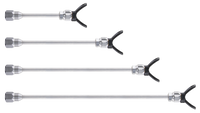
The nozzle controls how a pump sprayer delivers material to the surface. An adjustable tip can help you move between a more concentrated application and a broader spray, but the right setting depends on the material, surface, and task. A narrow pattern may help direct treatment into a specific area. A wider pattern can make it easier to cover an open surface evenly. Neither setting is automatically better for every job.
Match the pattern to the material and task
Start by checking the product label and the sprayer manufacturer's instructions. Look for guidance on application, dilution, agitation, and equipment compatibility. The product page for Integrity Supply's 2-gallon lawn and garden sprayer identifies an adjustable tip, but that specification does not make the sprayer suitable for every chemical or coating. Compatibility must come from the specific product and manufacturer guidance.
Before applying anything to the work area, test the spray on a safe, compatible surface. Check whether the pattern wets the surface evenly, creates unwanted mist, or leaves heavy spots. If the application is too concentrated, adjust the tip only within the range allowed by the instructions. If the pattern is too broad or creates drift, stop and reassess the setting, material, and conditions rather than trying to compensate with faster movement.
Keep the wand moving
Use a steady motion and keep the wand moving before, during, and after each pass. Pausing in one place can deposit more material in that area, while inconsistent speed can produce uneven wetting. Work in manageable passes and overlap them carefully when the product directions call for continuous coverage. Wind, nearby people, sensitive surfaces, and surrounding plants may also affect whether spraying is appropriate.
Integrity Supply's spraying equipment and supplies collection includes sprayers, tips, and pump or valve parts. Treat collection listings as a starting point, then confirm the exact tip, replacement part, and material compatibility before ordering or use.
What Can You Put in a Pump Sprayer?
There is no universal list of liquids that belongs in every pump sprayer. Compatibility depends on the complete fluid path, including the tank, seals, hose, wand, nozzle, and any internal pump components. Before filling the sprayer, match the material to the specific product's manufacturer specification and read the material label. A listing in a spraying collection does not prove that a sprayer is suitable for every chemical or material.
For water or a general-purpose, non-hazardous liquid, the equipment instructions still control. Confirm the tank material, seal materials, pressure limits, and cleaning requirements. If the product label or manufacturer documentation does not clearly support the combination, do not assume that a stainless tank, adjustable tip, or replacement part makes the entire sprayer compatible. The same caution applies when replacing components. Sprayer pump replacement parts must match the equipment and intended use according to the applicable specifications.
Why labels matter for adjuvants and tank mixes
An adjuvant is a separate product added to a spray mixture, and its use is not automatically appropriate just because it can be poured into the tank. Penn State Extension advises checking the pesticide label before using an adjuvant: review its guidance on spray adjuvants. The label may identify products that should or should not be mixed, whether agitation is required, and other handling conditions.
Water quality can also affect a mixture. Penn State recommends evaluating water quality before judging whether products will mix well. Water pH and dissolved minerals can affect how a pesticide performs, so do not substitute a general mixing rule for the label and manufacturer instructions. These details are especially important when a mixture includes more than one product.
Need help confirming a pump sprayer or replacement part? Contact Integrity Supply with the product details and intended material so you can verify fit and compatibility before ordering.
When handling chemicals, use the PPE, dilution, storage, and cleanup procedures specified by the product label and manufacturer. Penn State advises wearing proper PPE when mixing products in a spray tank. OSHA's hazard communication guidance explains the importance of accessible labels and Safety Data Sheets: read the tank-mixing guidance and review OSHA HazCom resources.
How Do You Use a Pump Sprayer Safely?
A pump sprayer is simple to operate, but safe use depends on the liquid in the tank, the equipment condition, and the instructions supplied with both. Use this workflow for routine applications, and follow the product label and manufacturer directions whenever they are more specific.
- Inspect the sprayer. Check the tank, cap, wand, hose, seals, nozzle, and pressure-release components for cracks, leaks, clogs, or damage. Confirm that the sprayer materials are approved for the liquid you plan to use. Product-listing presence alone does not prove chemical compatibility, so use the specific manufacturer specification as your reference.
- Read the label and SDS. Before opening or mixing a chemical, review the product label and Safety Data Sheet. OSHA explains that labels communicate hazards and precautionary measures, while SDS documents provide standardized hazard information. Confirm the permitted use, dilution, ventilation, storage, cleanup, and disposal requirements. Never assume that a pump sprayer is suitable for every chemical.
- Wear the required PPE. Use the gloves, eye or face protection, clothing, respirator, and other protective equipment specified by the label, SDS, and manufacturer. Penn State Extension also advises using proper PPE when mixing products in a spray tank. You can compare safety supplies and protective equipment for the job.
- Fill safely. Work in a controlled, well-ventilated location and keep the tank stable. Add only the approved liquid and amount. If using an adjuvant or tank mix, check the pesticide label first for compatibility, mixing order, and agitation requirements. Do not mix products based on appearance or guesswork.
- Pressurize the tank. Close the cap securely, then pump according to the equipment instructions. Keep your face and body away from the opening and do not exceed the sprayer's stated pressure limit. Stop if you notice a leak, unusual resistance, or damaged component.
- Test the spray. Point the wand away from people, animals, food, water, and desirable plants. Test on an appropriate surface to confirm the nozzle and flow are working as expected. Adjust the tip only as the manufacturer allows.
- Apply with control. Keep the wand directed at the intended surface, maintain a steady pace, and avoid drift, overspray, and contact with unprotected people. Follow label restrictions for weather, location, re-entry, and application technique. Never treat a test result as proof that every chemical is safe in the sprayer.
- Depressurize and clean. Release pressure as directed before opening the tank. Follow the label for rinsing, cleaning agents, and rinsate disposal, then clean the fluid path and allow parts to dry as instructed. Penn State notes that immediate, proper cleanup helps protect equipment, the environment, and subsequent applications.
How Do You Clean and Store a Pump Sprayer?
Clean a pump sprayer as soon as the job is finished, before residue can dry in the tank, hose, wand, valve, or nozzle. Penn State Extension notes that immediate maintenance can help preserve performance and reduce environmental risks. Start by emptying any remaining material according to the product label. Do not pour chemical residue onto soil, into a drain, or near desirable plants or water.
For pesticide or other chemical applications, the label controls the cleaning method, required protective equipment, and disposal instructions. Chemical-specific decontamination is not the same as a universal rinse. Use only the cleaning agent and procedure specified by the label or sprayer manufacturer. Penn State's pesticide sprayer cleanup guidance covers cleaning steps, tank-cleaning agents, and responsible rinsate handling.
Clean the entire fluid path
Rinse the tank as directed, then flush the fluid path so residue does not remain in the hose, shutoff, wand, filter, or nozzle. If the manufacturer permits disassembly, inspect and clean those parts individually. Pay particular attention to the nozzle and seals, where dried material or debris can affect the next application. Do not substitute a household cleaner or assume that water alone neutralizes a chemical.
Collect, use, or dispose of rinsate as the label directs. The location and method matter because rinsate can carry active residue. Penn State also cautions that inadequate cleaning can contribute to crop damage, particularly when a sprayer is used for different products or sensitive applications. Its before-and-after-use sprayer guidance explains why cleanout between products deserves careful attention.
Dry, inspect, and store it correctly
After cleaning, allow the tank and removable components to drain and dry as the manufacturer recommends. Check the hose, wand, nozzle, cap, seals, and pump for wear, cracking, blockage, or leaks. Replace damaged parts with components specified for that sprayer. Finally, store the empty, clean unit in the conditions listed by the manufacturer, protected from damage and unauthorized access. Keep chemical containers and their labels separate from the sprayer unless the product instructions say otherwise.
Which Pump Sprayer Products and Parts Should You Compare?
Once you know the job, compare the complete pump sprayer and the parts that keep it usable. A complete unit may be the simplest choice when you need a tank, pump, hose, wand, tip, and seals together. If your existing equipment is serviceable, replacing one worn component may be more practical. Integrity Supply's spraying equipment and supplies collection includes sprayers, tips, and pump or valve parts, so you can review the relevant product family instead of treating one component as a universal solution.
Start with the fluid path
Check the tank, hose, wand, tip, valve, seals, and pump as one system. A replacement seal or valve must match the sprayer design, connection, material, and intended use. Do not assume that a part shown in a spraying collection fits your model, or that it is suitable for every liquid. Product collection presence does not establish universal compatibility or availability. Use the specific manufacturer's specification and instructions to confirm the fit and material suitability before ordering.
Compare replacement pump specifications
Replacement pumps deserve a closer specification check than a quick name or photo comparison. For example, the listed sprayer pump replacement parts product is a Fimco High-Flo replacement pump rated at 1.2 GPM. That rating is a catalog example, not a universal recommendation. Match the pump's flow, connections, electrical requirements, pressure requirements, and manufacturer-approved application to your sprayer system before purchasing.
Also compare tips and valves against the work and the equipment instructions. If the required specification is unclear, contact Integrity Supply with the sprayer model and the part you need. Confirm suitability and current availability before relying on a listing for a scheduled job.
Frequently Asked Questions
What are pump sprayers good for?
Pump sprayers are useful for applying compatible liquids across lawn, garden, maintenance, and other small-area jobs. They use manually pressurized air to deliver the liquid through a nozzle. They are different from powered airless paint sprayers, which are designed for a separate equipment category and application method.
What is the correct way to use a pump sprayer?
Start by inspecting the tank, hose, wand, seals, and tip. Add only a material approved for that specific sprayer, following the product label and manufacturer instructions. Secure the cap, pressurize the tank as directed, test the spray in a suitable area, and apply with controlled passes. Depressurize before opening or servicing the tank.
How do you choose the best pump sprayer?
Match the tank capacity to the amount you can comfortably carry and the size of the job. Then check tank material, seals, hose construction, serviceable parts, and the available spray adjustment. A two-gallon stainless-steel compression sprayer with an adjustable tip is one catalog example, but its suitability still depends on the material and application.
How can a pump sprayer reach farther?
Reach depends on the sprayer design, pressure, nozzle setting, material, and application conditions. Use the manufacturer-approved tip and adjust the pattern for the task rather than assuming a narrow stream is always better. Test the spray first, keep a controlled distance, and avoid increasing pressure beyond the equipment instructions.
Can you put any chemical in a pump sprayer?
No. Check the product label and the sprayer manufacturer's compatibility specifications before filling the tank. Confirm that the tank, hose, seals, wand, and tip are approved for the material. Do not assume that a product listed in a spraying collection is compatible with every chemical, and follow label directions for mixing, PPE, cleanup, and disposal.
Need Help Matching a Pump Sprayer to the Job?
The right sprayer setup depends on the application, capacity, nozzle, replacement parts, and the product label's compatibility requirements. For help narrowing down suitable options and confirming those details before you buy or use a sprayer, contact Integrity Supply through the contact page. Include the job, material, and equipment details you already know so the team can help you compare the relevant pump sprayer and components.