





















Choosing the right sprayer can make a major difference on a large exterior project. Gas airless paint sprayers for sale offer the mobility and production capacity many professional painters need for barns, fences, commercial buildings, farm structures, and roofs. But comparing models takes more than checking the engine size or advertised pressure. You also need to consider the coating, tip size, gallons per minute, hose length, gun capacity, frame style, and jobsite conditions. The wrong machine may create pressure problems, excess overspray, or unnecessary maintenance. This guide explains what to compare, which Graco and Titan models deserve attention, and how to choose equipment that fits your crew and regular applications.
Key Takeaways
- Choose capacity based on the project: Compare the coating, surface area, crew size, hose length, power access, and expected production rate before selecting a sprayer.
- Compare the full setup, not just the price: Review flow rate, pressure, tip range, engine, gun capacity, frame style, included accessories, warranty, delivery, and replacement-part access.
- Build safety and maintenance into the purchase: Confirm ventilation and PPE requirements, use compatible tips and hoses, relieve pressure before servicing, and clean the pump and material-contact parts after each job.
What Should You Compare in Gas Airless Paint Sprayers for Sale?
Gas airless paint sprayers are designed for demanding work, but the right model depends on more than engine size or maximum pressure. Start with the project itself: surface area, coating type, expected production rate, crew size, and access to electrical power. A sprayer suited to a large barn or commercial exterior may be more equipment than you need for smaller repainting jobs.
Compare maximum gallons per minute (GPM), maximum tip size, pressure rating, engine, frame style, and gun capacity. These specifications help you determine whether the pump can handle the coating while maintaining a consistent spray pattern. Also check the package contents. A lower listed price may not include the hose, gun, spray tip, filters, or other accessories required for operation.
Gas-powered equipment offers practical mobility on large outdoor jobs, but it also requires fuel, engine maintenance, ventilation, and planning around noise and exhaust. Before purchasing, review the manufacturer’s operating instructions and Graco’s airless sprayer safety information. Then compare each model with the conditions your crew will face on the jobsite.
Large commercial, exterior, farm, barn, fence, and roof projects
For commercial exteriors, barns, fences, farm buildings, and roofs, compare production capacity with the size and condition of the surface. Large projects may call for long hose runs, wider spray patterns, larger tips, and enough pump capacity to maintain pressure while applying heavy materials.
Consider how the sprayer will reach each area. A cart-mounted unit may work well around a building, while a skid-mounted or trailer-ready setup may suit recurring work across a farm or commercial property. Roof-rig models can keep the engine and pump at ground level while the hose and gun reach elevated surfaces.
Do not choose a high-output sprayer based on surface area alone. A large pump may waste material and add unnecessary weight when the project includes small sections, detailed edges, or frequent repositioning. Review the manufacturer’s application recommendations and coating limits before ordering.
Gas-powered mobility without outlets
Gas airless sprayers are useful when a jobsite lacks dependable electrical service. You can bring the equipment to a remote property, new construction site, farm, or large exterior project without relying on extension cords or a nearby outlet. Gas power can also prevent voltage drops associated with long cable runs.
Mobility still requires careful planning. Place the sprayer on a stable surface with adequate airflow, away from open flames and combustible materials. Never operate a gasoline engine inside a building, garage, basement, or other enclosed space. OSHA’s guidance on gasoline-powered equipment explains important precautions involving exhaust and carbon monoxide.
Before ordering, check the frame, wheel size, handle design, and lifting points. A portable sprayer is useful only when your crew can move it safely across gravel, grass, stairs, or uneven ground.
Coating compatibility with primers, latex, elastomerics, block fillers, and roof coatings
Coating compatibility should guide your equipment choice. Thin materials, such as some stains and lacquers, may require different tips and pressure settings than latex paint, elastomerics, block fillers, or roof coatings. Heavy materials need a pump and fluid section that can move the product without excessive strain or frequent pressure loss.
Review the coating label and the sprayer manufacturer’s recommended tip range. A large maximum tip does not automatically mean the machine can handle every thick coating. The pump must also provide enough flow to maintain a steady fan pattern as the material moves through the hose and gun.
Material preparation matters, too. Follow the coating manufacturer’s instructions for mixing, thinning, and straining. Use compatible filters and hoses, and test the material on a small section before starting production work. Sherwin-Williams’ airless spray guidance includes helpful reminders about preparation and application technique.
Production speed versus weight, noise, exhaust, fuel, and maintenance
A higher-output sprayer can cover more area, but greater capacity often comes with additional weight, noise, fuel use, and maintenance. Compare the time saved during spraying with the effort required to load, transport, fuel, clean, and service the machine.
Noise may matter when working near occupied buildings, schools, offices, or residential properties. Exhaust also limits where the engine can operate, even when the spray work itself takes place indoors. For enclosed rooms or areas with limited airflow, an electric airless sprayer may be a better fit.
Routine service belongs in the comparison. Gas models typically require attention to engine oil, air filters, spark plugs, fuel systems, and pump components. Review the service schedule and confirm that replacement parts are available. A dependable unit with accessible service points may cost less to operate than a cheaper machine that causes repeated downtime.
High-pressure injection risks, PPE, ventilation, and overspray control
Airless sprayers operate at pressures that can inject material through skin, creating a serious medical emergency even when an injury appears minor. Never place your hand, finger, or any other body part in front of the spray tip. Engage the trigger lock when the gun is not in use, and relieve pressure before cleaning, changing tips, disconnecting hoses, or servicing components.
Wear protective clothing, chemical-resistant gloves, and eye protection. Choose respiratory protection based on the coating and jobsite conditions. Ventilation is especially important when spraying products that produce hazardous vapors. Keep workers and bystanders away from the spray area, and control ignition sources when using flammable materials.
Overspray can travel farther than expected, particularly outdoors in windy conditions. Mask windows, vehicles, siding, landscaping, and nearby surfaces before spraying. OSHA’s spray finishing requirements provide additional information about ventilation, fire prevention, and protective measures.
Matching the sprayer to surface area, crew size, coating, and jobsite access
The best sprayer matches the complete job, not just one specification. For a small crew applying standard exterior latex, a single-gun unit with moderate output may offer a practical balance of portability and productivity. A larger crew applying elastomerics or block fillers across a commercial building may need a higher-output pump, larger tip capacity, and support for multiple guns.
Consider how far the equipment must travel and how often the crew will move it. Cart-mounted models work well for many building exteriors, while skid-mounted or trailer-ready units may suit recurring work across large properties. Roof projects may call for a rig that keeps the engine and pump at ground level.
Before comparing prices, list the surface area, coating, hose length, expected daily production, crew size, and available power. Then confirm that each model’s GPM, maximum tip, engine, frame, and gun capacity meet those requirements. This process helps prevent your crew from paying for capacity it will not use, while ensuring the sprayer can handle the materials and conditions on the job.
Which Graco and Titan Gas Airless Sprayers Should You Compare?
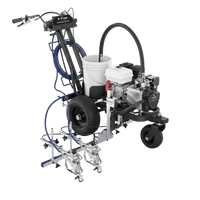
Graco and Titan both make gas-powered airless sprayers for contractors who need high production rates and the freedom to work without a nearby electrical outlet. These machines are useful for exterior painting, barns, fences, farm structures, commercial buildings, and roof coatings.
The right comparison is not simply Graco versus Titan. Start with the coating, surface area, crew size, and production requirements. A compact sprayer may be easier to load and transport, while a larger model may support thicker materials, wider tips, longer hose runs, or multiple guns. Review each manufacturer’s specifications carefully, since output, maximum tip size, and gun capacity can vary by configuration. Graco’s airless sprayer components guide explains how the pump, hose, gun, tip, and pressure settings work together.
Pay close attention to the package contents and total delivered cost. One listing may include a gun, hose, and tip, while another may include the sprayer only. Before ordering, confirm availability, warranty coverage, replacement parts, shipping costs, and lead time.
Graco GH 200 for portable commercial output
The Graco GH 200 is a practical option for contractors who need commercial airless performance in a relatively portable package. Its gas engine lets crews work away from outlets, generators, and long extension cords, which is useful on exterior jobs, vacant properties, and larger construction sites.
Compare the GH 200 with the coating and project size you handle most often. It may fit maintenance teams, repainting contractors, and smaller commercial projects that need more capacity than a typical electric sprayer. Before choosing it, confirm the gallons-per-minute rating, maximum tip size, gun configuration, and included accessories. A smaller unit may be easier to move, but a higher-output model could save time on thick coatings or very large surfaces.
Graco GH 300 and GH 300 ProContractor for production work
The Graco GH 300 and GH 300 ProContractor are worth comparing when production speed and daily durability matter. Both are intended for demanding contractor use, but the equipment package and included features may differ between the standard and ProContractor configurations.
Look closely at the pump design, frame, hose length, gun, filter arrangement, and service access. Depending on the model and package, a ProContractor configuration may include features that simplify repeated setup, cleaning, or transport. These sprayers may suit crews painting commercial exteriors, apartment buildings, warehouses, and other broad surfaces. For an accurate comparison, review the current GH Series information from Graco instead of comparing the model name alone.
Graco GH 733, GH 833, and GH 933 for high-output jobs
The Graco GH 733, GH 833, and GH 933 belong in a comparison for contractors handling very large surfaces or demanding coatings. These high-output machines are built for jobs where a smaller sprayer could cause pressure loss, slower coverage, or excessive pump wear.
Their greater capacity can support wider spray tips and heavier materials, but it also brings more weight, engine noise, fuel use, and transport planning. Review the maximum tip size and practical flow rate for your coating, not just the highest number on the specification sheet. Thick elastomerics, block fillers, and roof coatings may require a capable pump, the correct tip, and a properly sized hose. Make sure your crew can safely load, move, clean, and service the equipment between jobs.
Graco GMAX models for mobile contractors
Graco GMAX models are a common choice for mobile painting contractors who move between jobsites. Their gas-powered design supports exterior work where outlets are unavailable, while cart-style frames can make equipment easier to move across driveways, unfinished floors, and construction areas.
When comparing GMAX models, consider the difference between standard and higher-output configurations. A contractor painting homes and smaller commercial buildings may value easier transport and lower fuel use. A crew spraying warehouses, fences, or large exteriors may need more flow and a larger maximum tip. Check whether the selected package supports one or more guns, and confirm that the included hose and gun match the coatings you use. Graco’s airless spraying guide also covers basic application and pressure considerations.
Graco roof-rig models for roof coatings and elevated work
Graco roof-rig models are designed for specialized roofing and coating applications. A roof-rig setup can help organize the sprayer, hose, and related equipment when the pump remains at ground level and the operator works above. Evaluate the complete setup rather than the pump alone.
Roof coatings can be thick, abrasive, or fiber-filled, so compare maximum tip size, flow rate, pump construction, and filtration. Hose length and material handling also matter. Follow the coating manufacturer’s instructions for thinning, straining, tip selection, and application pressure. A roof-rig sprayer does not replace fall protection or proper access equipment. Review OSHA’s fall protection guidance before planning roof work, and follow the requirements that apply to your jobsite.
Titan PowrBeast 4700 for mid-range commercial performance
The Titan PowrBeast 4700 is a useful mid-range option for contractors who need commercial gas-powered performance without moving into the largest sprayer class. It may suit exterior repaints, medium-sized commercial buildings, barns, fences, and other projects that require steady production.
Compare its flow rate and maximum tip size with the materials you apply most often. A sprayer that performs well with standard latex may not be the right choice for heavy elastomerics or roof coatings. Review the engine specifications, frame design, hose length, and gun capacity as well. Contractors who typically work with one gun may appreciate the balance between output and portability. Confirm the current package contents before comparing its price with another model.
Titan PowrBeast 7700 for higher output
The Titan PowrBeast 7700 is intended for contractors who need more production capacity than a mid-range unit can provide. Its higher-output design may suit large exterior projects, industrial maintenance, commercial buildings, and thick coatings that require additional pump capacity.
Greater output can reduce spraying time, but it can also increase fuel consumption, noise, weight, and cleanup requirements. Compare the PowrBeast 7700 with the actual demands of the job rather than automatically choosing the largest machine. If the project uses one gun and a light coating, the added capacity may not improve results. If the crew uses wider tips, heavier materials, or long hose runs, the additional performance may be more useful. Titan’s professional sprayer resources provide more information about available configurations and applications.
Titan PowrTwin 6900 Plus and 8900 Plus for multi-gun production
The Titan PowrTwin 6900 Plus and 8900 Plus are designed for production teams that may need to operate multiple spray guns. Multi-gun capability can help two operators cover broad surfaces at the same time, making these models worth considering for warehouses, apartment buildings, bridges, large commercial exteriors, and other extensive projects.
The PowrTwin 8900 Plus may be the better fit when the crew needs more total output or regularly sprays demanding materials. The 6900 Plus may suit teams with more moderate multi-gun requirements. In either case, confirm how many guns the specific package supports, the available flow per gun, the maximum tip size, and the hose arrangement. Two guns will not automatically double production if the pump cannot maintain consistent pressure and material flow.
Compare GPM, PSI, maximum tip size, engine, gun capacity, and price
Use the same checklist for every Graco and Titan model. GPM, or gallons per minute, indicates potential material flow, but actual production depends on the coating, tip, pressure, hose length, operator technique, and surface preparation. PSI describes pressure capacity, but spraying at the maximum rating is not always necessary. Excessive pressure can create overspray, accelerate tip wear, and produce an uneven finish.
Also compare maximum tip size, engine horsepower, fuel capacity, starting system, gun capacity, frame style, and included accessories. A larger tip may help with thick coatings, while a smaller tip can provide more control for trim, edges, and lighter materials. Check whether the price includes guns, hoses, tips, filters, and extensions. Integrity Supply can help contractors compare painting equipment and supplies by application, configuration, and jobsite requirements before placing an order.
How Do GPM, PSI, and Tip Size Affect Performance?
GPM, PSI, and tip size work together to determine how quickly a gas airless paint sprayer applies material and how evenly it covers a surface. GPM measures material flow, PSI measures pressure, and the tip controls the spray pattern and orifice size. Looking at just one specification can lead to a poor match for the coating or job.
A sprayer with a high maximum output will not deliver that performance in every application. Coating thickness, hose length, tip size, filter condition, pump wear, and the number of guns in use all affect actual results. A large tip may require more material flow than a smaller pump can provide, while a long hose can add resistance between the pump and gun.
Use the listed specifications as a starting point, then compare them with your coating, surface area, crew size, and expected production rate. For large commercial exteriors, barns, fences, and roof projects, leave some capacity available rather than choosing a sprayer that will operate at its limit all day. This can help maintain a more consistent spray pattern and reduce strain on the pump.
It is also important to separate maximum ratings from normal operating conditions. Maximum GPM and PSI show what the equipment may achieve under specific conditions, but your working settings should match the coating manufacturer’s recommendations. The right combination delivers steady coverage without unnecessary overspray, excessive tip wear, or avoidable downtime.
Compare maximum GPM with practical production rates
Gallons per minute, or GPM, indicates the maximum amount of material a sprayer can move under specified conditions. It does not represent the amount you will apply on every job. A thick coating, smaller tip, long hose, clogged filter, or lower working pressure can reduce the actual flow rate.
For example, a sprayer rated at 1.2 GPM may deliver less when applying a heavy elastomeric coating through a long hose. A higher rating gives you more capacity, but your practical production rate still depends on the coating and application method. Titan’s airless sprayer guide recommends considering the material and job requirements instead of relying on one rating.
For large surfaces, compare the sprayer’s maximum GPM with the gallons your crew expects to apply each hour. Leave reserve capacity so the pump does not run continuously at its limit.
Compare maximum PSI with working pressure
Maximum PSI describes the highest pressure a sprayer can produce, while working pressure is the setting used to atomize a particular coating. You may not need maximum pressure for every material. Excessive pressure can create more overspray, wear tips faster, and make it harder to control the finish.
A suitable sprayer should maintain consistent pressure while material moves through the hose and tip. If pressure fluctuates, inspect the filter, tip, hose, seals, and packings before assuming the engine lacks power. Painters Solutions identifies common causes of pressure loss, including clogged filters, worn tips, deteriorated seals, and dried paint buildup.
Set the pressure only high enough to produce a complete, even fan. Start at a lower setting and increase it gradually until the pattern looks consistent without excessive mist.
Match tip orifice, fan width, spray pattern, and material flow
The spray tip affects both the width of the fan and the amount of material delivered. Tip sizes are commonly written as three digits. In a 517 tip, the first digit indicates an approximate 10-inch fan width when spraying from about 12 inches away, while the last two digits represent a 0.017-inch orifice.
A larger orifice allows more material to pass through and generally suits thicker coatings. Smaller openings work better for thinner materials, such as stains and lacquers. Popular Mechanics explains how tip openings relate to coating thickness, with larger openings intended for thicker substances.
Choose a fan width based on the surface. Wider fans cover siding, walls, and broad roof areas efficiently. Narrower fans provide better control around trim, railings, posts, edges, and smaller sections. The pump must support the selected orifice at the pressure required by the coating.
Choose maximum tip sizes for elastomerics, block fillers, and roof coatings
Heavy materials require a sprayer with enough pump capacity and a maximum tip size suited to the product. Elastomerics, block fillers, mastics, and roof coatings often need larger orifices than standard latex paint. A small tip can restrict flow, force the pump to work harder, and produce an uneven pattern.
Check the coating manufacturer’s recommended tip range before choosing a sprayer. Then confirm that the machine’s maximum tip rating supports that range with one gun, or with multiple guns if your crew will spray together. Titan explains how a tip controls pattern size and material flow, making this specification important for coverage and finish quality.
Do not select the largest tip automatically. An oversized orifice can deliver too much material, cause runs, and make it difficult to maintain a consistent film thickness. Match the tip to the product, surface, and application rate.
Compare single-gun output with multi-gun capacity
A single-gun setup often suits one operator, smaller buildings, touch-up work, or jobs where the crew moves between areas. It allows the pump’s capacity to serve one gun and generally simplifies hose management, pressure adjustments, and cleanup.
Multi-gun systems can help crews cover large exteriors, warehouses, fences, barns, and other broad surfaces faster. However, the sprayer must provide enough GPM and pressure for every gun operating at the same time. Dividing a machine’s output between two guns can create weak patterns if the pump is undersized for the combined tip sizes.
Some gas airless models can operate multiple guns from one sprayer. Portland Compressor’s gas sprayer information shows why gun capacity should be reviewed alongside output ratings. Check the recommended number of guns, maximum combined tip size, hose configuration, and material demand before choosing a production setup.
Evaluate engine horsepower, fuel capacity, runtime, and starting system
The engine supplies power to the pump, so horsepower matters when spraying thick coatings, using larger tips, or running multiple guns. More horsepower can provide additional capacity, but it may also increase weight, fuel use, noise, and operating cost. Match the engine size to the pump and the work you expect to complete.
Fuel capacity affects how often the operator needs to stop and refuel. For remote farms, barns, roofs, and large commercial sites, longer runtime can reduce interruptions. Electric start systems can make repeated starts easier, while recoil start systems can be simple and dependable when properly maintained.
Review the engine’s oil requirements, air filter access, spark plug service, and fuel recommendations before buying. Pump maintenance matters too. Sherwin-Williams recommends regular pump fluid use to help keep spray equipment operating smoothly.
Compare pump design, duty cycle, durability, and serviceability
Pump design affects how well a sprayer handles repeated commercial use. Look for a pump built for the materials and production schedule you expect, especially if you apply abrasive block fillers, roof coatings, or elastomerics. A unit suited to occasional projects may not hold up to daily, high-volume work.
Duty cycle is another important factor. A sprayer intended for continuous production should maintain pressure without frequent cool-down periods or component replacement. Ask whether the pump uses replaceable packings, valves, filters, and other wear parts that you can obtain easily.
Serviceability can affect downtime as much as the original output rating. Components that are difficult to reach may take longer to clean or repair. Cleaning the machine after each use helps protect the pump and material-contact parts. HD Supply recommends inspecting and cleaning airless equipment before and after every job.
Check hose length, gun, filters, extensions, and included accessories
A sprayer’s package can affect performance and convenience as much as the pump itself. Confirm the included hose length, gun, tip, filters, suction tube, spray extensions, and other accessories. A longer hose can help reach upper floors or large surfaces, but it may also increase material resistance and pressure loss.
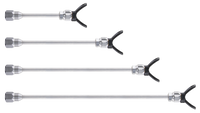
The gun should be rated for the pressure and coating you plan to use. Filters need to match the material and should be easy to remove for cleaning. Extensions can reduce ladder use and help operators reach ceilings, roof sections, and tall walls, but they should not make the gun difficult to control.
Check whether the listed price covers a complete system or the sprayer only. You may need compatible tips, additional hose, a second gun, pump fluid, or specialized filters. Before ordering, compare the package contents with the job requirements and inspect the equipment before and after use.
Prevent pressure loss and wear caused by an undersized sprayer
An undersized sprayer may struggle to maintain pressure when paired with a large tip, thick coating, long hose, or second gun. Operators may respond by increasing pressure, but that can create overspray, accelerate tip wear, and place additional strain on the pump and engine.
Watch for a weak or uneven fan, frequent pressure cycling, spitting, excessive mist, slow coverage, or a pattern that collapses as the gun moves across the surface. First check the tip, filters, hose, suction tube, and coating preparation. If these parts are clean and compatible, the sprayer may not have enough capacity for the application.
Select a machine with reserve capacity instead of sizing it to the minimum requirement. Regularly replacing worn tips and service parts helps restore stable pressure and a consistent pattern, as Painters Solutions notes in its sprayer maintenance guidance.
How Should You Configure a Sprayer for Your Jobsite?
The right gas airless sprayer configuration depends on more than engine size and pressure. Consider how your crew will move the unit, which coating you will apply, how many guns you need, and whether the work will take place at ground level or on a roof. A setup that suits a large commercial exterior may be unnecessarily heavy for residential repainting.
Start by listing the project’s practical demands: surface area, coating type, crew size, available power, access points, and expected production rate. Then compare the frame, mounting style, gun capacity, and included accessories. Graco’s airless sprayer guide explains how pressure, tip size, and material flow affect equipment selection.
Choose Hi-Boy or Lo-Boy frames for transport and maneuverability
Hi-Boy and Lo-Boy describe the frame and cart design around the sprayer. A Hi-Boy model positions the engine and pump higher off the ground, which can make controls easier to see and reach during a job. Larger wheels may also help when moving across gravel, uneven ground, or construction debris.
A Lo-Boy model sits lower and may be easier to lift into a truck or trailer. This can help crews that move equipment between rooms, buildings, or separate work areas. Compare the unit’s total weight, wheel size, handle design, and lifting points. A lighter frame is not always the easiest choice if it struggles on rough terrain.
Select cart-mounted, skid-mounted, trailer-ready, or roof-rig setups
A cart-mounted sprayer works well for contractors who move equipment around a jobsite throughout the day. The cart keeps the engine, pump, and controls together, while wheels and a handle simplify short-distance transport.
Skid-mounted units can be placed on a truck, trailer, or dedicated equipment platform. Trailer-ready systems may suit larger production projects, while roof-rig configurations are designed around roof coating applications and elevated access. Review the manufacturer’s commercial and roof-rig sprayer options before choosing a standard cart unit for this type of work. Confirm mounting requirements, tie-down points, clearance, and loading procedures.
Compare standard, ProContractor, and heavy-duty configurations
Standard configurations can cover routine spraying needs for residential, commercial, and maintenance projects. ProContractor versions may include features that support frequent use, such as improved controls, accessory storage, simpler maintenance, or components intended for higher production demands.
Heavy-duty configurations are designed for demanding schedules, thicker coatings, larger surface areas, or multiple operators. They may include a larger engine, bigger pump, higher material flow, or a frame built for repeated transport. Compare the complete specification sheet rather than relying on the trim name. Check maximum tip size, gallons per minute, gun capacity, engine horsepower, pump design, and warranty coverage. Graco’s contractor equipment listings provide a useful starting point for comparing model families.
Choose single-gun setups for smaller crews and intermittent work
A single-gun sprayer is often a practical choice for a solo contractor or small crew. One operator can control the spray pattern, pressure, and coating flow without coordinating with another painter. Single-gun systems can handle homes, small commercial spaces, touch-up work, fences, and maintenance projects.
This setup also requires less hose and fewer accessories at the jobsite. Fewer components can make cleaning, transport, and storage easier. Choose a unit with enough output for the coating and surface area, but avoid paying for multi-gun capacity that will rarely be used. For elastomerics or block fillers, confirm that the pump and maximum tip size support the material.
Choose multi-gun setups for production teams and larger surfaces
Multi-gun systems allow two or more operators to spray from one power source. They can suit large walls, warehouses, barns, commercial buildings, and agricultural structures where several painters work at once. The sprayer must have enough output to maintain pressure and material flow while all guns are operating.
Check the manufacturer’s stated gun capacity and maximum output before connecting additional guns. Coating thickness, tip size, hose length, and pressure settings all affect performance. A unit may support multiple guns with thinner materials but fewer guns with heavy coatings. Plan the hose layout carefully, protect connections, and assign one person to monitor pressure, material supply, and engine operation. Graco’s airless spraying guidance offers additional information about sprayer capacity and production work.
Compare gas and electric hydraulic convertible models
Gas-powered sprayers provide mobility when a jobsite has no nearby electrical service. Some hydraulic models can also convert to electric operation, giving contractors more flexibility when power is available. This can help when a project moves from an outdoor building to an enclosed area where exhaust and fuel storage require extra planning.
Before choosing a convertible model, confirm how electric operation works and which power requirements apply. The conversion may require a dedicated circuit, a specific voltage, or a separate electric motor. Gas operation may remain practical for remote barns, fences, farms, and large exterior surfaces. Electric operation may suit occupied buildings or areas where noise and exhaust need to be limited. Follow the manufacturer’s instructions and the site’s safety requirements for either power source.
Choose between sprayer-only packages and complete systems
A sprayer-only package may suit a crew that already owns compatible guns, hoses, filters, tips, and extensions. It can also work for contractors who prefer to select accessories for each coating. Confirm that existing components match the sprayer’s pressure rating, connection size, and material requirements.
Complete systems commonly include a spray gun, hose, and one or more tips, which simplifies ordering. However, the included accessories may not suit every application. A package intended for latex paint may not include the tip or filtration required for elastomerics, block fillers, or roof coatings. Review the package contents, then add compatible replacement tips, extra hose, pump fluid, filters, and safety equipment. Integrity Supply’s product catalog can help you compare equipment and related jobsite supplies.
Match the setup to homes, buildings, barns, fences, farm structures, and roofs
Residential homes and smaller buildings often call for a mobile, single-gun cart with enough output for the selected paint or primer. A compact setup can make it easier to work around landscaping, vehicles, porches, and narrow access points. For fences and farm structures, prioritize wheel clearance, hose length, and dependable operation away from electrical outlets.
Large barns, warehouses, commercial buildings, and agricultural structures may require a higher-output sprayer, longer hoses, or a multi-gun configuration. Roof projects call for additional planning because the crew must manage the coating, hoses, ladders, lifts, and fall protection. A roof-rig system may simplify equipment access, but it must be used according to the manufacturer’s instructions and site safety requirements. The OSHA fall protection overview provides general guidance for elevated work. Before ordering, match the sprayer to the coating, surface area, crew size, access conditions, and transport method.
How Do Gas and Electric Airless Sprayers Compare?
Gas and electric airless sprayers can both deliver a smooth, professional finish, but they serve different jobsite needs. The better option depends on the surface area, coating type, access to electricity, crew size, and production schedule.
Gas-powered models are commonly used for large exterior projects, remote jobsites, barns, fences, roofs, and coatings that require sustained pressure. Electric airless sprayers are often more practical for interior work, residential projects, and smaller commercial jobs where a reliable power source is available.
Do not compare equipment by PSI or price alone. Review the sprayer’s gallons per minute, maximum tip size, engine or motor, gun capacity, weight, fuel or power requirements, and maintenance needs. A high-output unit may finish a large project sooner, but it can also cost more to purchase, transport, fuel, and service.
Airless spraying can cover broad surfaces quickly because the pump sends coating directly to the spray gun. Graco’s airless spraying guidelines explain how pressure, tip size, and application technique affect coverage and finish quality. Use those factors, along with the coating manufacturer’s instructions, to compare equipment accurately.
Compare output, coverage speed, and heavy-coating performance
Gas airless sprayers generally provide the output needed for large buildings, fences, barns, roofs, and other expansive surfaces. Their engines can power the pump continuously without depending on a jobsite outlet. This helps crews maintain a steady spray pattern and cover more surface area during each work period.
Electric models can handle many interior and residential applications, including primers, latex paint, stains, and lighter coatings. A smaller electric unit may struggle with elastomerics, block fillers, or roof coatings if the material requires a larger tip and higher sustained flow.
Compare the sprayer’s maximum GPM and tip size with the coating manufacturer’s recommendations. Higher material flow can reduce spray time, but only when the crew can keep up with masking, refilling, backrolling, and other preparation tasks. An oversized sprayer may add cost without improving results on smaller projects.
Weigh gasoline mobility against outlets, generators, and extension cords
Gas-powered equipment provides flexibility on jobsites without dependable electrical service. You can use a gas sprayer at a barn, fence line, farm structure, new construction site, or remote exterior project without locating an outlet or placing a generator nearby.
Electric sprayers require a suitable power source. Long extension cords can create voltage drop, clutter, and trip hazards. A generator solves the power problem, but it also adds equipment to transport, fuel, and maintain. If reliable electricity is already available, an electric model may simplify setup and daily operation.
If power access changes from one project to the next, gasoline mobility may justify the additional weight and maintenance. Gas equipment still requires thoughtful placement, however. Keep the sprayer on a stable surface with clear airflow, safe fuel storage, and enough room for the operator to work without creating a hazard.
Compare weight, noise, exhaust, fuel use, and runtime
Electric airless sprayers are often lighter and quieter, which can make them easier to handle in homes, occupied buildings, and smaller work areas. They produce no engine exhaust at the point of use, making them more suitable when the operator works near residents, employees, customers, or other trades.
Gas models usually weigh more because they include an engine, fuel tank, and related components. They also create engine noise and exhaust, require gasoline, and need regular oil checks. Their advantage is sustained performance in locations where electrical service is limited and demanding coatings require more pump capacity.
Runtime depends on engine size, fuel capacity, pump load, pressure, and work interruptions. A larger engine does not automatically reduce operating costs. Compare fuel use, expected production, and maintenance requirements with your normal workday. A high-output sprayer may complete a job sooner, but it can consume more fuel and require more frequent service.
Plan for outdoor work, enclosed spaces, ventilation, and ignition risks
Gas airless sprayers are intended for outdoor work or areas with effective ventilation. Never operate a gasoline engine in an enclosed room, garage, basement, or other poorly ventilated space. Carbon monoxide can accumulate quickly, and the CDC’s carbon monoxide guidance explains the risks associated with fuel-burning equipment.
Fuel and engine exhaust also create ignition concerns near flammable vapors, solvents, and combustible materials. Follow the sprayer manual, coating safety data sheet, and jobsite safety requirements before starting work. Keep the engine away from stored fuel, open containers, and areas where vapors may collect.
Outdoor spraying requires planning, too. Wind can carry overspray onto vehicles, windows, siding, landscaping, and nearby structures. Use suitable masking, monitor conditions, and position the equipment so exhaust and spray drift do not affect people or property.
Compare startup, fueling, cleanup, and routine maintenance
Electric sprayers are generally simple to start. Connect the equipment to the correct power source, prime the pump, and confirm that the gun, hose, filters, and tip match the coating. There is no gasoline to transport or engine oil to check, although the pump and material-contact parts still need thorough cleaning.
Gas models add fueling and engine checks before use. Operators may need to inspect the fuel level, oil, air filter, spark plug, and fuel system. Cold starts, stale fuel, and clogged filters can delay production. Follow the manufacturer’s maintenance schedule and use the recommended fuel and oil.
Both types require careful flushing after every job. Remove coating from the pump, suction tube, hose, gun, filter, and tip before it dries. Regular maintenance helps preserve pressure and spray-pattern consistency. Sherwin-Williams provides sprayer maintenance recommendations that can help crews create a consistent cleanup routine.
Choose an electric airless sprayer when it fits the job
An electric airless sprayer may be the practical choice when the project has reliable power and does not require maximum production. Residential rooms, apartments, small commercial spaces, maintenance work, and some trim applications can benefit from a lighter machine with less noise and no engine-related service.
Electric equipment is also useful when crews work indoors or in occupied spaces. Lower noise makes communication easier, and the absence of engine exhaust simplifies equipment placement. You still need appropriate ventilation for paint vapors and overspray, but you will not add gasoline-engine emissions to the work area.
Check the sprayer’s output and maximum tip size before purchasing. A compact electric model may handle standard latex paint and primer, but it may not provide enough material flow for thick elastomerics, block fillers, or large exterior projects. Select a machine based on the coating and surface area, rather than choosing solely by purchase price.
Choose gas-powered production when its costs make sense
Gas equipment can make financial sense when your crew regularly handles large exterior surfaces, remote jobsites, thick coatings, or projects with tight completion windows. Higher output can reduce spray time and help the crew cover more area before weather or scheduling conditions change.
The value depends on how often you use that capacity. A contractor who sprays houses, warehouses, fences, barns, or roofs each week may save meaningful labor time with a gas-powered unit. A contractor who uses a sprayer occasionally may complete the same type of work with an electric model and avoid fuel, engine service, and added transport requirements.
Estimate the full operating cost before buying. Include fuel, oil, filters, pump fluid, tips, hoses, repairs, and downtime, along with the initial equipment price. Titan’s airless sprayer selection guidance recommends considering job size, coating demands, and available power when comparing gas and electric equipment.
Match the sprayer to power access, coating demands, and production goals
Start with the jobsite, then match the sprayer to the work. For a small interior project with dependable electricity, a compact electric airless sprayer may provide enough output with less noise and easier handling. For a large exterior job without convenient power, a gas model can provide the mobility and sustained performance the crew requires.
Next, review the coating. Standard paints and primers may work well with either type when paired with the correct tip and pressure. Elastomerics, block fillers, and roof coatings often require a larger tip, higher material flow, and a pump designed for demanding applications. The equipment must support the coating without excessive strain or pressure loss.
Finally, consider crew size and production targets. A single operator may prefer a manageable electric unit, while a larger crew may need a gas-powered sprayer with single-gun or multi-gun capacity. Compare power access, surface area, coating viscosity, transport needs, and expected labor savings before selecting a model.
How Should You Match the Sprayer to the Coating?
A gas airless paint sprayer can apply many types of coatings, but the sprayer and accessories must match the material. A setup that works for interior latex paint may not have enough capacity for elastomerics, block fillers, or roof coatings. Using the wrong combination can cause clogs, uneven coverage, poor atomization, excess overspray, and premature wear on the pump.
Start with the coating label and technical data sheet. Look for the recommended tip size, pressure range, thinning instructions, cleanup solvent, and equipment requirements. Then compare those details with the sprayer’s maximum tip size, flow rate, gun rating, and material compatibility. Graco’s spray tip guidance can help you understand how tip size affects fan width and material flow.
The right setup is not necessarily the largest or most powerful option. Your goal is to create a consistent spray pattern at the lowest practical pressure, keep the coating moving without frequent clogs, and give the crew enough output for the surface area. Use these guidelines when preparing a sprayer for primers, paints, fences, buildings, masonry, and roof work.
Choose tips for primers, latex paint, and oil-based coatings
Spray tips control both the fan width and the size of the opening through which the coating passes. Smaller orifices typically suit thinner products, such as stains, lacquers, and some oil-based coatings. Primers and latex paints often require a medium-size tip, although the correct choice depends on the product’s viscosity and application instructions.
Thicker latex paints may need a larger orifice and a sprayer with enough flow capacity to maintain consistent pressure. Avoid choosing a tip based only on the coating category. Two products labeled as primers or exterior paints can have different solids content and spray requirements.
Check the technical data sheet before setup, then test the tip on scrap material or an inconspicuous section of the surface. Heavy edges may indicate that the tip is too large, pressure is too low, or the material needs preparation. If the sprayer cannot maintain pressure, the tip may exceed the pump’s practical capacity.
Select equipment for elastomerics, block fillers, roof coatings, and other heavy materials
Elastomerics, block fillers, masonry coatings, and roof coatings generally require more flow than standard wall paint. These materials can contain larger solids or have a thicker consistency, so they need a sprayer with a suitable maximum tip size and a pump designed for sustained output.
Review the coating manufacturer’s equipment recommendations before selecting a gas airless sprayer. Airless equipment can apply many materials without thinning, but the sprayer still needs enough capacity for the product and job conditions. Graco’s airless spraying guide explains how pressure, tip selection, and material viscosity affect application.
For heavy coatings, use the correct gun, hose, filters, and tip instead of forcing the material through a small setup. A larger hose can help reduce pressure loss, while the proper filter can limit debris without restricting flow. Follow the coating label closely, since some products require specific sprayers, tip sizes, strainers, or cleanup procedures.
Match tip orifice size to coating thickness and pump capacity
The tip orifice controls how much material leaves the gun during each pass. A larger opening allows more coating to flow, but it also places greater demand on the pump. If the tip is too large for the sprayer, pressure may drop during application, resulting in weak atomization and an uneven finish.
A smaller tip can improve control with thinner coatings, but it may clog when used with heavy materials or products containing larger particles. The right choice balances coating thickness, desired film build, and pump capacity. Compare the recommended tip range with the sprayer’s maximum tip size and flow rate before beginning the job.
Maximum specifications are useful when comparing equipment, but they do not guarantee that every material will spray well at that limit. A sprayer may handle its maximum tip size with one product but require a smaller tip for a thicker coating or longer hose. Start within the manufacturer’s recommended range and adjust only after testing the spray pattern.
Choose fan widths for broad surfaces, edges, fences, and detailed areas
Tip numbers usually identify both fan width and orifice size. A wider fan covers more area with each pass, making it useful for siding, walls, barns, fences, and other broad surfaces. A narrower fan gives you more control around trim, edges, posts, railings, and smaller sections.
Choose the fan width based on the surface and your working distance. A wide fan can help cover large areas efficiently, but it may create more overspray near windows, landscaping, vehicles, or neighboring surfaces. A narrower fan may take longer, but it provides better control in tight areas.
Keep the gun perpendicular to the surface and move at a steady speed. Start moving before pulling the trigger, and release the trigger before stopping the stroke. Overlap each pass according to the coating instructions, often by about 50%, to maintain even coverage without creating heavy stripes along the edges.
Adjust pressure for coverage and overspray control
Set the pressure high enough to atomize the coating, then stop increasing it once the spray pattern becomes consistent. Excessive pressure can create more overspray, wear the tip faster, and make the finish harder to control. Graco’s airless sprayer guidance recommends using the lowest pressure that produces proper atomization.
A pattern with heavy lines at both edges may indicate insufficient pressure, a worn tip, or material that is too thick for the current setup. Increasing pressure slightly may correct the pattern, but pressure should not compensate for an unsuitable tip or undersized sprayer.
Test the pressure while holding the gun at the recommended distance from the surface. Hose length, temperature, coating viscosity, and elevation can affect performance. Make small adjustments and check the finish regularly instead of setting the pressure once and leaving it unchanged throughout the job.
Strain coatings and follow manufacturer compatibility guidance
Straining removes dried paint skin, lumps, dirt, and other debris that can clog the tip or restrict material flow. Use a strainer suited to the coating, and strain the material into a clean container before filling the sprayer. Heavy coatings may require a larger mesh size, while thinner products can use a finer strainer if the product instructions allow it.
Do not assume that a coating can be thinned, mixed, or sprayed through any airless unit. Check the technical data sheet for approved thinning materials, application temperatures, tip sizes, pressure ranges, and cleanup solvents. Sherwin-Williams’ sprayer maintenance guidance also recommends keeping debris out of the equipment to protect spray tips and material-contact components.
If a coating contains aggregate, fibers, or large particles, confirm that the gun, hose, filter, and tip can handle it. Removing a filter may reduce clogs in some applications, but do so only when the equipment and coating manufacturers permit it.
Test the spray pattern before spraying at production speed
Always test the sprayer before beginning full production. Use a scrap board, cardboard, or an inconspicuous area of the project to check atomization, fan width, coverage, and color consistency. This short test can reveal a clogged tip, incorrect pressure, poor material preparation, or an unsuitable hose and filter combination.
Hold the gun at a consistent distance and make several overlapping passes. Look for an even pattern without heavy lines, tails, spitting, or large droplets. If the pattern is uneven, follow the manufacturer’s pressure-relief procedure before inspecting the tip and filters or making adjustments.
The test also helps the operator establish a comfortable spray speed. Moving too quickly can reduce film thickness, while moving too slowly can create runs and heavy spots. Once the pattern is consistent, begin with a manageable section and check the coverage before continuing across the full surface.
Match hoses, filters, guns, and extensions to the material
Every component between the pump and the surface affects performance. Use a hose rated for the sprayer’s pressure and compatible with the coating. Long or undersized hoses can contribute to pressure loss, especially when spraying thick materials. A larger-diameter hose may help maintain material flow on larger jobs, but confirm the manufacturer’s recommendations first.
Choose a gun and filter that match the material and tip size. Fine filters can work well with smooth paints, while heavy coatings may require a coarser filter or a different filtration setup. Extensions can improve reach on ceilings, walls, and roofs, but they also change handling and may affect pressure at the tip.
Inspect fittings, swivel connections, suction tubes, and seals before each job. If material is leaking, pulsing, or failing to reach the gun consistently, stop and correct the issue instead of compensating with higher pressure. Integrity Supply helps professional painters and maintenance teams compare compatible sprayer hoses, guns, tips, and accessories for a complete setup.
Replace worn tips before they affect finish quality and productivity
Spray tips wear as material passes through the orifice, especially when applying abrasive coatings such as primers, masonry products, block fillers, and elastomerics. A worn tip gradually produces a wider fan, reduced pressure, heavier edges, and increased material use. These changes can be easy to miss when a crew is focused on completing a job.
Inspect the spray pattern throughout the project and compare it with the original test pattern. If increasing pressure no longer restores a clean fan, the tip may be worn or damaged. Do not correct a worn tip by spraying at excessive pressure, since this can increase overspray and place additional strain on the pump.
Keep replacement tips available for the coating and project. Store them clean and protect them from impact. Replace them when the pattern becomes inconsistent, even if the tip still appears usable. A fresh tip helps maintain even coverage, predictable film thickness, and efficient material use.
What Do Gas Airless Sprayers Cost to Own?
A gas airless sprayer is a significant equipment purchase for painting contractors, especially those handling commercial exteriors, barns, fences, farm structures, and roof coatings. The purchase price is only one part of the total cost. Fuel, engine oil, spray tips, hoses, pump fluid, maintenance, repairs, shipping, and taxes also affect the expense over the machine’s working life.
Start by defining the production level you need. A compact single-gun sprayer may suit occasional exterior work, while a high-output model or multi-gun system may be more practical for a crew covering large surfaces. Compare the complete package, expected operating costs, and jobsite requirements instead of choosing the lowest advertised price.
A useful ownership estimate should account for the equipment’s productivity, the coatings you apply, and the cost of downtime. A machine that costs more upfront may be worthwhile if it reduces labor hours and handles your usual materials without repeated clogs or pressure problems. On the other hand, a larger unit can be unnecessary for smaller jobs and may add fuel, transport, and maintenance costs.
Compare professional models priced from about $4,906.30 to $9,937.00
Professional gas airless sprayers can cost several thousand dollars. Listings from Paint Sprayers Unlimited show prices ranging from about $4,906.30 for the PowrTwin PT4900 Plus to $9,937.00 for the GH300 Pro Contractor Series. You can compare gas-powered airless sprayer prices to see how output, frame style, and included equipment affect the purchase price.
Use this range as a budgeting reference, not a fixed price list. A sprayer with a larger engine, higher output, wider maximum tip, or multiple guns will typically cost more. Freight, taxes, accessories, and current availability can also change the final amount. Always confirm the price for the exact configuration you plan to purchase.
Compare Graco and Titan prices by output and performance tier
Graco and Titan offer gas-powered sprayers for several production levels. Graco options commonly include GMAX units, GH hydraulic sprayers, Big Rig systems, and roof-rig equipment. Titan models, including PowrBeast and PowrTwin units, cover different output and crew-size requirements.
Compare machines within the same performance tier rather than comparing brand names alone. A smaller single-gun sprayer may cost less than a heavy-duty model, but it may not support the same coating volume or tip size. Review Graco and Titan gas airless sprayers by GPM, maximum PSI, maximum tip, engine size, gun capacity, and intended application.
See how GPM, PSI, engine size, maximum tip, and gun capacity affect price
A sprayer’s specifications help explain its price. Gallons per minute, or GPM, indicates the machine’s maximum material output. Maximum PSI describes its pressure capacity, while maximum tip size indicates how much material the pump can deliver through a spray tip. Engine horsepower affects how well the unit maintains pressure during demanding work.
Available configurations may range from 1.5 to 2.5 GPM, with maximum pressures from 1,000 to 7,250 PSI and maximum tip sizes from 0.023 to 0.039 inches or larger. These figures do not guarantee the same practical production rate on every job. Coating thickness, hose length, tip wear, and the number of guns in use also matter. Higher specifications generally increase the equipment price.
Compare sprayer-only prices with packages that include guns, hoses, tips, and accessories
A sprayer-only listing may appear less expensive until you add the equipment required for operation. Check whether the package includes a spray gun, hose, tip, filters, suction tube, extension, and necessary fittings. For elastomerics, block fillers, and roof coatings, confirm that the included parts can handle the material.
A complete package may cost more upfront but provide better value if it arrives ready for the job. A sprayer-only configuration can make sense if you already own compatible guns, hoses, and tips. Read the product details closely and compare the total package value, including the cost of parts you would need to add separately.
Budget for fuel, oil, filters, tips, hoses, pump fluid, repairs, shipping, and taxes
Ownership expenses continue after delivery. Gasoline and engine oil are routine costs, while filters, spray tips, packings, seals, hoses, and pump fluid require periodic replacement. Thick coatings and long spray sessions can increase wear, especially when the equipment operates with large tips or near its maximum capacity.
Also budget for cleaning supplies, pump preserver, repairs, freight, and sales tax. Cleaning filters after each use helps prevent debris and dried material from restricting flow, which can cause pressure changes, sputtering, and uneven spray patterns. Airless sprayer maintenance guidance can help you create a routine for cleaning and replacing worn parts.
Estimate cost per job using productivity, labor, coverage, and downtime
The most useful cost comparison asks how the sprayer affects each job. Estimate the surface area you typically spray, the coating volume required, and the number of workers operating the equipment. Include setup, masking, cleanup, refueling, material changes, and loading time in the calculation.
A higher-priced sprayer may make financial sense if it covers more area per hour and reduces labor on large projects. A lower-priced model may be the better choice for smaller jobs if its output meets your needs. Include downtime as well. A machine that struggles with your coating or tip size can create delays and extra labor costs. Choosing the right sprayer starts with the jobsite’s power access, coating demands, and production requirements.
Compare sale prices with total delivered value
A sale price does not always represent the lowest overall cost. Add shipping, taxes, accessories, and service charges before comparing two models. Check whether one package includes a gun, hose, tips, filters, and other parts that you would need to purchase separately for another unit.
Warranty coverage, parts availability, service support, and delivery time also have practical value. A slightly higher-priced sprayer may be the better purchase if it arrives ready to use and has accessible replacement parts. When reviewing gas airless equipment, compare the total value offered in each package, not just the discount shown on the product page.
Confirm that lower-priced configurations include required accessories
Lower-priced configurations may exclude items that are essential for your application. Before ordering, confirm the gun type, hose length, maximum tip, filters, and fittings. Check whether the unit supports the coating you plan to spray and whether the package includes enough equipment for one operator or several.
This check is especially important when comparing single-gun and multi-gun systems. A lower-priced single-gun model may not provide enough output for a crew, while a multi-gun package may require additional hoses or guns before everyone can work. Check the accessories included with each configuration and price missing components before making your decision.
Verify current pricing, availability, lead time, and package contents
Equipment pricing and availability can change, particularly for specialized commercial models. Before placing an order, confirm the current price, stock status, estimated lead time, shipping method, and final package contents. Ask whether the unit is ready to ship or must be ordered from the manufacturer.
Confirm warranty details, replacement-part support, and service options as well. A delayed machine can affect a scheduled project, while an incomplete package can add unexpected costs after delivery. Integrity Supply supports professional painters, contractors, maintenance teams, and DIY customers with equipment and related supplies. Contact the team to verify the configuration that fits your coating, crew size, surface area, and jobsite requirements.
What Can Buyer Reviews Tell You?
Product specifications show what a gas airless sprayer is designed to do. Buyer reviews reveal what it is like to assemble, operate, clean, and maintain on a real jobsite. For professional painters and contractors, those details can matter as much as maximum PSI or gallons per minute. A sprayer that looks ideal on paper may require more setup, cleanup, or routine maintenance than your crew expects.
Look for patterns instead of relying on one unusually positive or negative comment. Several reviews mentioning difficult priming, frequent tip clogs, limited portability, or inconsistent pressure deserve closer attention. Then compare those observations with the manufacturer’s specifications, operating instructions, and your usual coatings. Graco’s guide to airless spraying explains how these machines handle different materials and jobsite conditions.
Assess setup requirements and the learning curve for new operators
Reviews can help you estimate how much time your crew will need to assemble and prepare a sprayer. Look for comments about connecting the hose, installing the gun and tip, priming the pump, adjusting pressure, and starting the engine. These details are particularly helpful if several operators share the equipment or if you move between jobs frequently.
Pay attention to whether reviewers describe the controls as simple or confusing. A high-output unit may require more careful pressure adjustments and coating preparation than a smaller model. Cleaning may also take longer when the system has a long material hose or high-capacity pump. Popular Mechanics’ sprayer testing notes that flushing larger machines may require a garden hose connection, though the process becomes easier once operators learn the routine.
Plan for overspray, masking, and surface protection
Buyer reviews often describe the preparation required before spraying. Look for comments about masking windows, covering floors, protecting vehicles, and sealing nearby surfaces. Overspray can travel farther than expected, particularly when the sprayer operates at high pressure or the operator uses a tip that is too large for the job.
This feedback helps you plan labor and materials before arriving at a site. A reviewer may praise a sprayer for covering large areas quickly while also mentioning hours spent masking and cleaning nearby surfaces. Consumer Reports explains how overspray behaves, including how paint can bounce off the target and land on floors, ceilings, windows, and other objects. Treat these comments as part of the equipment’s operating requirements.
Compare cleanup time and access to material-contact components
Cleanup comments can show whether a sprayer fits your daily schedule. Look for details about flushing the suction tube, hose, gun, filters, and pump. Reviewers may also explain whether they can reach these parts easily or need special tools to remove dried material. This matters when switching between colors, coatings, or job locations.
A machine that takes longer to clean may still suit large production work, but account for that labor before buying. Dried paint inside a hose, filter, or spray gun can restrict flow and create an uneven pattern. Airless sprayer maintenance guidance recommends thoroughly cleaning material-contact components to help prevent these issues. Give extra weight to reviews from contractors using similar coatings and working at a similar volume.
Evaluate durability, reliability, and pressure consistency
Reviews become more useful when they describe performance over months or years instead of after one project. Search for comments about reliable starts, stable pressure, pump wear, and performance during long spraying sessions. A contractor who uses the machine weekly can provide more relevant information than someone who completed one small home project.
Pay attention to reports of pressure loss, spitting, surging, or uneven spray patterns. These symptoms may result from clogged filters, worn tips, damaged seals, or deteriorated packings rather than a defective engine or pump. Painters Solutions outlines common maintenance issues that can help you compare review complaints with likely service needs. Also note whether buyers found replacement parts and technical support easy to obtain.
Check performance with thick coatings and straining requirements
If you apply elastomerics, block fillers, roof coatings, or other heavy materials, focus on reviews that mention those products specifically. A sprayer may perform well with standard latex paint but struggle with a thicker coating if the tip, hose, filter, or pump is not properly matched. Look for comments about maintaining pressure, producing an even pattern, and avoiding repeated clogs.
Reviews may also reveal whether users strain coatings before filling the sprayer. Dried paint skin, grit, or other debris can clog a tip and interrupt production. Sherwin-Williams recommends straining paint to help protect spray equipment and prevent material blockages. Compare buyer experiences with the machine’s maximum tip size and the coating manufacturer’s application instructions before ordering.
Consider noise, weight, fueling, and transport
A gas-powered sprayer can work where electrical access is limited, but reviews can reveal how practical it is to move and operate. Look for comments about frame design, lifting points, wheel quality, fuel consumption, starting effort, and storage. A heavy unit may suit a large commercial project but prove difficult to load into a truck or move across uneven ground.
Noise and exhaust deserve attention as well. Reviewers may mention whether the engine is comfortable to run near occupied buildings or whether the machine must remain well away from doors and windows. Consider how often your crew works near landscaping, on roofs, between structures, or in partially enclosed areas. Graco’s airless spraying overview highlights the portability of these machines, but the best frame and transport setup still depend on your jobsite.
Look for recurring feedback about tips, hoses, pumps, and engine maintenance
Repeated comments about worn spray tips, damaged hoses, clogged filters, pump service, or difficult engine starts can reveal ownership costs that a product page may not show. Separate normal wear from unusual failures. Spray tips and filters require routine attention, especially when equipment handles abrasive or heavily pigmented materials.
Check whether reviewers mention using throat-seal liquid or pump lubricant during frequent operation. The correct fluid helps protect pump components and may reduce avoidable wear. Sherwin-Williams’ maintenance guidance discusses using the fluid recommended for each pump brand. If reviews mention hard-to-find parts or lengthy service delays, confirm parts availability before committing to the machine.
Weigh review patterns against specifications and job requirements
Reviews should support your decision, not replace equipment specifications. A contractor spraying fences may value portability and quick setup, while a crew coating a warehouse may need a larger pump, a wider tip range, or multi-gun capacity. Compare review comments with your surface area, coating thickness, hose length, crew size, and available fuel access.
Create a short checklist before purchasing. Note the minimum output you need, the largest tip you expect to use, the materials you apply most often, and the amount of maintenance your crew can handle. Then choose a model with reasonable capacity for upcoming work. Titan recommends selecting a sprayer slightly above current volume requirements, which can help prevent an undersized pump from limiting future projects.
How Can You Maintain and Safely Operate a Gas Airless Sprayer?
A gas airless sprayer can handle demanding exterior and commercial work, but it needs consistent maintenance and careful operation. High pressure helps apply coatings quickly, yet it can also cause serious injuries if the gun is aimed at a person or handled carelessly. Read the owner’s manual before use, follow the manufacturer’s startup and shutdown procedures, and make sure every operator understands the equipment.
Before each job, inspect the sprayer, prepare the coating, and confirm that the work area has adequate ventilation. Keep the unit on a stable surface, route hoses away from walkways, and wear the required personal protective equipment. Graco’s airless sprayer startup guidance provides a helpful reference for priming, spraying, and pressure-related precautions.
Inspect the engine, hoses, fittings, guards, tips, and filters
Begin with a visual inspection before connecting the sprayer to a coating supply. Check the engine for loose parts, fuel leaks, damaged components, and blocked air passages. Examine the high-pressure hose for cuts, abrasions, kinks, bulges, or exposed reinforcement. Replace damaged hoses instead of wrapping them with tape or attempting a temporary repair.
Inspect fittings, suction tubes, clamps, spray guards, and gun connections for wear or looseness. Confirm that the tip guard is secure and that the spray tip is free from damage. Remove and inspect the filters for dried coating or debris, then clean or replace them as needed. Blocked filters can restrict material flow and create an uneven spray pattern.
Look beneath the unit for oil, fuel, hydraulic fluid, or coating leaks. Make sure belts, pulleys, and other moving parts have their protective guards in place. OSHA’s spray finishing requirements provide additional information about ventilation, ignition sources, and protective measures.
Prime the pump correctly and check for air leaks
Priming removes air from the pump and material line, allowing the sprayer to build steady pressure. Place the suction tube in the properly strained coating or flushing fluid, then open the prime valve according to the equipment manual. Start the engine at the recommended setting and let the pump circulate fluid until the stream is smooth and free of visible air bubbles.
If the pump will not prime, inspect the suction tube, inlet strainer, siphon hose, and connections. A loose fitting can allow air into the system even when no coating leaks out. Check that the inlet ball and other valves move freely, and confirm that the material is not too thick for the sprayer.
Do not repeatedly increase pressure to force the pump to prime. Excessive pressure can hide an air leak or place unnecessary strain on the pump. Stop the unit, relieve pressure safely, and inspect the material path. Because priming steps vary by model, use the manufacturer’s manual as your primary reference.
Troubleshoot pressure loss, spitting, uneven patterns, and clogs
Pressure loss often starts with a simple restriction. Check the spray tip, gun filter, manifold filter, inlet strainer, and suction tube for dried coating or debris. A worn tip can produce a wide, uneven, or soft spray pattern even when the pressure setting appears normal. If reversing the tip temporarily improves the pattern, clean it properly before continuing.
Spitting can result from air in the material line, an improperly seated tip, a loose connection, or a partially clogged filter. Uneven coverage may also come from holding the gun too far from the surface, moving too slowly, or using a tip that does not suit the coating.
Follow the equipment maker’s troubleshooting instructions before removing pump components. Titan’s support resources can help operators find model-specific information and identify common equipment concerns. Always shut down and relieve pressure before working on the gun, tip, hose, or filters.
Flush with water or mineral spirits based on the coating
Flush the sprayer immediately after use. Dried coating can harden inside the pump, hose, gun, and filters, making the next startup slower and more expensive. Use clean water for water-based coatings, including many latex paints, primers, and acrylic products. For oil-based coatings, use the solvent specified on the product label and in the sprayer manual, often mineral spirits.
Never assume that one cleaning fluid works for every material. Some coatings require a specific solvent, and certain equipment components may not be compatible with aggressive cleaners. Read the coating’s safety data sheet and follow its handling instructions before beginning cleanup.
Run the flushing fluid through the suction tube, pump, hose, and gun until it exits clear. Keep the gun pointed into an approved container during this step, and avoid creating unnecessary spray mist. Graco’s airless sprayer cleanup instructions explain the general process, but the manual for your specific model takes priority.
Clean filters, guns, tips, suction tubes, and material-contact parts
Remove the gun filter, manifold filter, inlet strainer, tip, and guard after flushing. Clean each part with the correct fluid and use a soft brush to remove residue. Do not use a metal object to clear a spray tip because it can damage the orifice and change the spray pattern.
Flush the gun until the fluid runs clean, then inspect the trigger, gasket, tip seal, and guard. Clean the suction tube and strainer thoroughly after spraying textured materials, block fillers, elastomerics, or roof coatings. These products can leave heavy residue that restricts flow when it dries.
Wipe the outside of the sprayer and remove coating from fittings, frame surfaces, and controls. Do not submerge the engine or direct cleaning fluid into electrical components. Store tips and small parts in a clean container, and replace damaged seals, cracked filters, and worn tip guards before the next job.
Use TSL or manufacturer-approved throat-seal and pump fluid
Throat-seal liquid, commonly called TSL, helps protect the pump’s packing area from dried coating and reduces friction during operation. Add the amount specified by the manufacturer to the appropriate reservoir before spraying. Check the level throughout the job, especially when running the sprayer for long periods.
Use only TSL or another pump fluid approved for your equipment. Household oils, unapproved solvents, and random lubricants may damage packings or react with the coating. Keep the fluid in the proper reservoir, and do not pour it into the paint supply unless the manual specifically instructs you to do so.
Pump fluid does not replace regular cleaning. If coating enters the throat area or dries around the rod, stop the equipment and follow the model-specific service procedure. Sherwin-Williams’ sprayer maintenance guidance includes practical reminders about pump fluid, cleaning, and routine equipment care.
Maintain fuel, oil, air filters, spark plugs, seals, valves, and packings
A gas-powered sprayer depends on both a reliable engine and a properly maintained pump. Check the fuel level before starting, use the fuel specified by the engine manufacturer, and clean up spills immediately. Inspect the engine oil at the recommended intervals and change it according to the service schedule.
Keep the air filter clean so the engine receives adequate airflow. Inspect the spark plug, fuel lines, and fuel filter when the engine runs poorly, starts hard, or loses power. Keep cooling areas free of paint, dust, and debris, but never clean a hot engine with flammable liquid.
On the pump side, watch for worn seals, valves, packings, and piston components. Warning signs include fluctuating pressure, coating leaking around the packing nut, or material entering areas where it should not. Use the parts diagram for your model when ordering replacements, and schedule service before a small leak or worn valve interrupts a production job.
Relieve pressure before cleaning, changing tips, or servicing components
Pressure relief is one of the most important airless sprayer safety steps. Do not remove the tip, gun filter, hose, or fitting while the system is pressurized. Even after the engine is off, trapped pressure can force coating through a small opening with enough energy to penetrate skin.
Follow the exact pressure-relief procedure in the manual. In general, turn off the engine, engage the gun safety, reduce pressure, and open the prime or drain valve into an approved waste container. Trigger the gun only when it is pointed safely and the procedure calls for it. Confirm that pressure has been released before loosening any connection.
Never use your hand, a rag, or a finger to check for a leak. If a high-pressure injection injury occurs, seek emergency medical care immediately and tell medical staff that paint or coating may have entered the tissue. The CDC’s guidance on high-pressure injection injuries explains why these injuries require prompt treatment, even when the wound looks minor.
Winterize with pump preserver in freezing conditions
Water left inside a sprayer can freeze, expand, and damage the pump, fittings, valves, or housing. Before storing the unit in a cold location, flush out water-based coating and cleaning water completely. Then circulate a manufacturer-approved pump preservative or antifreeze through the material path.
Open the prime valve and run the preservative through the suction tube until it reaches the pump and outlet. Follow the product label and equipment manual for the correct amount and storage procedure. Do not mix incompatible fluids, and label the sprayer if preservative remains inside it.
Store the machine in a dry, protected area away from open flames and excess moisture. Drain or stabilize the fuel as directed by the engine manufacturer, and check the oil before the next startup. When returning the sprayer to service, flush out the preservative properly and collect the discharged fluid for disposal according to local requirements.
Control exhaust and overspray with proper PPE and ventilation
Gas airless sprayers produce engine exhaust, while airless application can create fine overspray. Use gas-powered equipment outdoors or in a space designed for safe ventilation. Never run the engine in an enclosed room, basement, garage, or other poorly ventilated area where carbon monoxide can accumulate.
Keep the engine and fuel away from open flames, pilot lights, sparks, and smoking materials. Review the coating’s safety data sheet for ventilation requirements, ignition hazards, and recommended respiratory protection. Wear safety glasses or a face shield, gloves suited to the coating, protective clothing, and hearing protection when needed.
Control overspray by masking nearby surfaces, selecting the correct tip, using the lowest pressure that produces a consistent pattern, and keeping the gun perpendicular to the surface. Use a properly fitted respirator when the coating or work area requires one. NIOSH’s spray painting guidance covers ventilation, respiratory protection, and other controls that help reduce exposure during spray operations.
Where Can You Buy Gas Airless Paint Sprayers for Sale?
Buying a gas airless paint sprayer is a major equipment decision for professional painters, contractors, maintenance teams, and serious DIY customers. The right supplier can help you compare sprayers by coating type, output, job size, frame style, and total delivered cost.
Integrity Supply serves customers nationwide with access to products from hundreds of manufacturers. Its catalog includes airless sprayers, painting supplies, safety equipment, hardware, and jobsite accessories. Before you request a quote, gather details about your project, including the coating, surface area, crew size, available fuel and storage, and expected production rate. This information makes it easier to identify a sprayer that fits the work instead of choosing based on price alone.
Get nationwide retail and wholesale equipment support from Integrity Supply
Integrity Supply provides access to a wide range of airless paint sprayers for professional and personal projects. As a non-stocking retail and wholesale supplier, the company can help customers review manufacturer listings and compare equipment for different applications.
This support is useful when you need more than a basic product search. A sales representative can help you compare gas-powered models, review available configurations, and identify the accessories required for your coating and application method. Start by browsing the Integrity Supply online catalog, then contact the sales team with questions about specific models.
Contractors can also ask about ordering related supplies with the sprayer. Purchasing compatible tips, hoses, filters, pump fluids, and safety equipment together can make it easier to prepare for an upcoming job.
Shop the online catalog or visit the Cleveland team for assistance
The online catalog allows you to review product categories and equipment from your office, home, or jobsite. Use it to compare brands, configurations, accessories, and listed specifications before requesting pricing or availability.
Local customers can visit the Integrity Supply team in Cleveland, Ohio, for in-person assistance. This option may be helpful when you want to discuss the coating, job size, surface conditions, and access limitations with a sales representative. It also gives you an opportunity to ask about maintenance requirements, such as the sprayer care practices recommended by Sherwin-Williams.
Before contacting the supplier, prepare the material name, estimated gallons, surface area, crew size, and target completion time. These details help narrow the list to suitable equipment.
Compare Graco and Titan listings by configuration, price, and availability
Graco and Titan offer gas airless sprayers for several production levels. Compare each listing by gallons per minute, maximum pressure, maximum tip size, engine, gun capacity, frame style, and included accessories. A higher rating is not always necessary if your crew handles smaller projects or sprays lighter materials.
Configuration can affect the price and usefulness of a machine. One listing may include a single gun and hose, while another may support multiple guns for production work. Check whether the unit is a standard, heavy-duty, ProContractor, roof-rig, or multi-gun configuration.
Review material compatibility before choosing between brands. Different sprayers may require specific fluids or operating practices, so follow the manufacturer’s recommendations. Titan explains the importance of using the recommended fluid for your sprayer when comparing equipment.
Confirm non-stocking order times, shipping, and delivered cost
Because Integrity Supply is a non-stocking supplier, some gas airless sprayers may ship from the manufacturer after you place an order. Confirm the estimated order time before scheduling labor, equipment rentals, or a large exterior project.
Ask for the complete delivered cost, including shipping, taxes, and any charges related to oversized or specialized equipment. A lower listed price may not be the better value if the unit has a long lead time or requires separate purchases for a gun, hose, filters, or tips.
Also ask whether tracking will be provided and what you should inspect when the equipment arrives. Check the frame, engine, hoses, fittings, controls, and packaging for damage before use. Review airless sprayer maintenance guidance so you understand the cleaning and care required after delivery.
Check warranty coverage, replacement parts, technical support, and service access
A gas airless sprayer combines an engine, pump, pressure controls, hoses, filters, and fluid-contact components. Before ordering, confirm the warranty terms for each major system. Ask which parts are covered, how long coverage lasts, and whether labor or shipping is included.
Find out how to order replacement tips, packings, valves, filters, hoses, and engine components. You should also ask whether the supplier or manufacturer provides troubleshooting support, service referrals, and assistance with warranty claims.
Parts and service access can affect the cost of ownership. A machine that remains unused while you wait for a specialized component may delay the project and leave a crew without productive work. Choose a supplier that can help you plan for routine maintenance and future repairs.
Add compatible hoses, tips, filters, pump fluids, and safety equipment
A sprayer is only one part of the application system. Your order may also need a pressure-rated hose, gun, filters, spray tips, tip guards, extensions, suction tubes, and pump fluid. Each component should be rated for the sprayer and suitable for the coating you plan to apply.
Select tips according to the material and surface. Elastomerics, block fillers, roof coatings, and other thick products often require larger or specialized tips than standard latex paint. Confirm the recommended tip range and hose requirements before ordering.
Include personal protective equipment in your purchasing plan. Depending on the coating and jobsite, you may need gloves, eye protection, protective clothing, respiratory protection, and adequate ventilation. Tarps, masking materials, and overspray controls can also reduce cleanup and protect nearby surfaces.
Build a final checklist for coating, surface area, crew size, output, and jobsite access
Before comparing models, write down the coating type and its recommended tip range. Estimate the surface area, material quantity, available working hours, and number of operators. These details help you compare practical production needs rather than relying only on maximum specifications.
Consider how the machine will reach the work area. A cart-mounted unit may suit a building exterior, while a trailer-ready or roof-rig configuration may work better for remote areas or elevated projects. Account for stairs, narrow gates, uneven ground, fuel storage, and available shelter.
Your checklist should include:
- Coating type and estimated quantity
- Recommended tip size and hose length
- Surface area and production schedule
- Crew size and gun count
- Indoor or outdoor use
- Fuel, ventilation, and storage requirements
- Transport and access limitations
- Cleaning, maintenance, and service plans
A structured checklist can support consistent spray performance and finish quality. Use airless sprayer maintenance guidance to account for upkeep before finalizing your equipment choice.
Verify gun count, maximum tip, engine, accessories, and operating requirements before ordering
Read the complete product listing and confirm every specification that affects the job. Check the number of guns supported, maximum tip size, engine horsepower, fuel requirements, maximum pressure, output rating, and included accessories.
Pay attention to what the package does not include. You may need to purchase a hose, gun, filters, tip, extension, suction tube, or other component separately. Confirm that each accessory is rated for the sprayer and compatible with the coating.
Ask about starting procedures, fuel storage, ventilation, noise, and routine maintenance. Confirm whether the sprayer requires specific fluids or operating practices. It is also helpful to review common problems, including pressure loss, uneven spray patterns, clogs, and pump wear. Airless sprayer troubleshooting guidance can help you prepare questions before placing the order.
Frequently Asked Questions
What size gas airless sprayer do I need?
Choose a sprayer based on your coating, surface area, crew size, and expected production rate. A moderate-output, single-gun model may suit smaller exterior projects, while large commercial buildings, barns, roofs, and thick coatings may require higher flow and multi-gun capacity.
Can gas airless sprayers apply elastomerics, block fillers, and roof coatings?
Many commercial gas sprayers can handle these materials when paired with the correct tip, hose, filter, and pressure setting. Always check the coating manufacturer’s recommendations and confirm that the sprayer’s maximum tip size and flow rate meet the application requirements.
Should I buy a gas or electric airless sprayer?
Gas models work well for large outdoor jobs and locations without dependable electrical service. Electric models are often more suitable for indoor work, occupied buildings, and smaller projects where lower noise and no engine exhaust are important.
What accessories should come with a gas airless sprayer?
Check whether the package includes a spray gun, pressure-rated hose, tip, filters, tip guard, suction tube, and pump fluid. You may need additional tips, extensions, hoses, or a second gun depending on the coating and crew setup.
Where can I get help choosing a gas airless sprayer?
Integrity Supply serves contractors, maintenance teams, painters, and DIY customers through its online catalog and Cleveland, Ohio, sales team. Share your coating, surface area, crew size, jobsite access, and production goals so the team can help identify a suitable configuration and related supplies.